Mass Death of Tor Soro Fish in Kuningan, Response from IPB University’s FPIK Professor
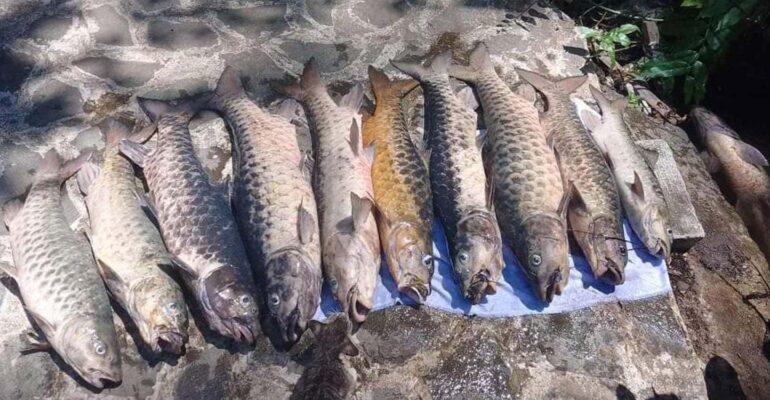
The sudden death of tor soro fish in Kuningan, leaving only about 200 fish alive, has become a serious concern. Prof Sri Nuryati, a professor at the Faculty of Fisheries and Marine Science (FPIK) at IPB University, emphasized that the response must begin with an investigation into the exact cause, accompanied by improvements in water quality and increased fish immunity.
“Fish are aquatic organisms that are highly dependent on the condition of their aquatic environment. So, whatever happens in the water will greatly affect the physiological condition of the fish,” she said.
She explained that gills, as organs that directly interact with water, are the most vulnerable to changes in environmental quality. High levels of organic matter, decreased oxygen, and changes in temperature can trigger disorders in the gills.
“This condition opens opportunities for aquatic microorganisms such as bacteria, fungi, protozoa, and multicellular parasites to attach and infect. Bacteria are usually secondary infectors, while primary infectors sometimes originate from parasites, such as Lernaea sp.,” she explained.
Early Indications
Prof Sri mentioned that initial reports in Kuningan (based on online news) indicated the presence of anchor worms (Lernaea sp.). However, she emphasized that the exact cause must be determined through laboratory testing. In addition, administering salt or medication without knowing the main cause is often ineffective.
According to her, ponds that are not drained for a long time have the potential to reduce water quality. Uneaten feed will decompose into toxic ammonia. “Ammonia is not good, fish cannot tolerate ammonia at certain concentrations. It can be disruptive and eventually kill them,” she said.
Fish density that exceeds standards also increases the risk of stress and disease. In the event of an outbreak, she recommends separating the surviving fish to waters that meet aquaculture quality standards, accompanied by aeration to meet oxygen requirements.
Not only that, changes in temperature due to rain can lower fish immunity. Fish are poikilothermic, which means their body temperature depends on the environment.
Regarding the chances of recovery for the tor soro fish population, Prof Sri stated that this is highly dependent on the management measures taken. She recommended improving water quality management and boosting immunity through feed containing natural immunostimulants that are effective for immunostimulation and phytotherapy.
“There must be fish health management. The water must be well managed and their immunity boosted,” she emphasized. (dr)(IAAS/DAM)