IPB University Expert: Mass Food Production is High Risk if Food Safety is Ignored
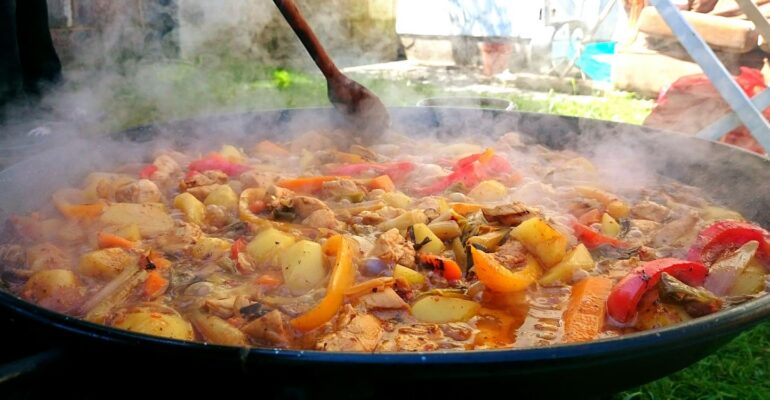
Cooking for hundreds or even thousands of servings cannot be compared to cooking in a home kitchen. Mass food production, such as in catering businesses and communal meal programs, carries serious food safety risks if not managed properly. Even minor errors in the process can lead to microbial contamination and health hazards.
Prof Ahmad Sulaeman, Professor at the Faculty of Human Ecology (FEMA), IPB University, emphasized that mass food production is highly complex and requires strict oversight standards. He made this statement in the IPB Podcast, which aired on the IPB TV YouTube channel.
“When we cook for one family, we can use visual cues as a benchmark. But when producing thousands of servings, that benchmark can no longer be used. It may look cooked, but it could still be raw inside,” said Prof Ahmad, who is also an expert in Nutrition and Food Safety.
According to him, one of the main risks of mass food production is that the cooking process does not reach a safe temperature. Chicken meat, for example, must reach a minimum internal temperature of 72°C to ensure that pathogenic microbes are killed.
“Without measuring the internal temperature using a thermometer, food has the potential to still contain harmful bacteria such as Salmonella and E. coli,” he said.
The risk increases when food is not consumed immediately after cooking. Prof Ahmad explained that excessive holding time can trigger massive microbial growth.
“In the temperature danger zone, microbes can double every 20 minutes. In seven hours, one microbial cell can develop into more than one million,” he explained.
In addition, the use of a large workforce also poses a risk. Food handlers who lack an understanding of hygiene and sanitation can cause additional food contamination.
In fact, he continued, improper cooking processes can reduce the digestibility of nutrients or even destroy them. “Unsafe food is not food. If it is unsafe, it should not be consumed. Automatically, the nutritional content is lost,” he said.
To minimize risk, Prof Ahmad emphasized the important role of food inspectors and nutritionists. Inspectors must understand the potential hazards of products, how to prevent them, and be able to monitor safety indicators such as temperature, pH, and cooking processes.
“Inspectors must thoroughly understand the products, know their potential hazards, know how to prevent them, and be able to monitor the process directly. Nutritionists must also be involved in the inspection and supervision of production,” he said.
Food safety, he continued, must be maintained throughout the food chain, from the production and processing of food ingredients to their distribution and consumption by the public. From farm to table.
He also encouraged catering businesses and the food industry to evaluate their kitchen capacity, facility suitability, workforce readiness, and compliance with hygiene and sanitation standards, including registering their businesses with the local health authority.
“Don’t just accept orders. The responsibility is great because we are feeding thousands of people. If we follow SOPs and have a sanitation hygiene certificate, we will be more confident and the risk of poisoning can be reduced,” he concluded. (IAAS/FHD)