
Preventing Stunting, IPB University Vocational School Lecturers and Students Give Nutrition Counseling
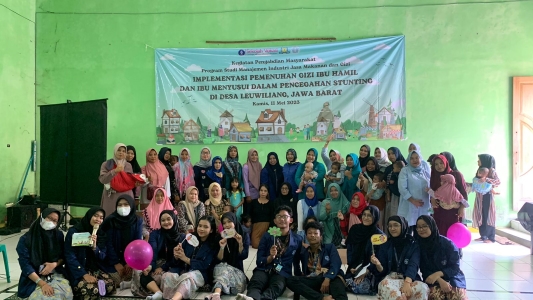
Lecturers and Students of Vocational School (SV) IPB University from the Management of Food Service Industry and Nutrition (MIJMG) Study Program conducted community service activities in the form of nutrition counseling to Leuwiliang Village, Bogor Regency, West Java.
The topic of the counseling this time was ‘Implementation of Nutrition Fulfillment for Pregnant Women and Breastfeeding Mothers in Stunting Prevention’ which was given to 33 pregnant and breastfeeding mothers. The purpose of the counseling was to increase parents’ knowledge related to stunting prevention.
Rosyda Dianah, SKM, MKM, a lecturer at IPB University Vocational School from the MIJMG Study Program explained several steps to prevent stunting for pregnant and lactating mothers. According to her, stunting can be prevented by fulfilling nutritional needs during pregnancy.
“Prevention of stunting can also be done by taking prenatal supplements, avoiding infectious diseases, stopping smoking and consuming alcohol. Exclusive breastfeeding and eating regularly with sufficient portions are also important,” she said.
She advised mothers to pay attention to the 5J model of nutrition needed during pregnancy. “The 5J nutrition is the number of calories, meal schedule, type of food, substitute nutrition and maintenance of implementation,” she added.
Aisyah Putri Nabila, a student of IPB University Vocational School, added that the symptoms of stunting in children include slower growth, inactivity and poor performance. In the short term, stunting can have an impact on the occurrence of developmental disorders in the brain, body metabolism and also physically.
“In the long run, children can be at high risk for degenerative diseases such as cancer, diabetes and obesity,” she added.
At the counseling, Maria Yusuf, who is also a student of the Vocational School of IPB University, explained about the types of food that are good for consumption for pregnant women and nursing mothers. She also gave examples of appropriate and inappropriate snacks for pregnant women and a complete one-day menu as well as snacks.
“By giving examples of food and snack menus, it is hoped that pregnant women can be more careful about what to consume during pregnancy,” she hoped.
IPB University students and lecturers at that moment also provided pocket books that were expected to be useful as educational media in increasing understanding of stunting prevention starting from the First 1000 Days of Birth (HPK). (*/Rz) (IAAS/NVA)

