
IPB Lecturer Conducted Research on the Effect of Feed with High Dose of Clove Oil on Pomfret Fish
Clove oil is potential as a growth promoter in broiler poultry at a dose of 400 ppm. Research reported that feed added by 8 milligrams per hundred grams of clove oil showed a positive effect on growth of tilapia. Clove oil applied at a concentration of 75 ppm also did not indicate a hematologic change in goldfish Carassius auratus. Although further research is needed, clove oil is classified as a safe natural anesthetic to determine the possibility of toxicity.
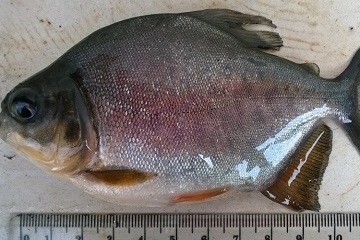
The three researchers consisted of Dedi Jusadi, Andi Tiara Eka Diana Puteri and Sri Nuryati, from the Department of Aquaculture, Faculty of Fisheries and Marine Sciences, Bogor Agricultural University (FPIK-IPB) conducted a study to find out the effect of feed with high dose of clove oil on the growth response and physiological of pomfret Colossoma macropomum.
In the experiment, as many as 25 fish pomfret with an initial weight of individual fish of 7.62 grams were stocked into aquarium filled with 180 liters water. A total of 15 aquariums were used in this research. Fish kept for 45 days. The seeds of freshwater pomfret were fed using feed added with Syzygium aromaticum clove oil at zero level and one hundred milligrams per hundred grams of feed. The aim of this study was to see the effect of the addition of high dose clove oil in fish feed (100 milligrams per hundred grams of feed) on the growth performance and physiological response of pomfret.
Clove oil added to the test feed was previously emulsified with 2 percent egg (20 grams per hundred grams of feed) and 200 milli liters of water. The test feed dough is printed on a pellet printing machine then dried at an oven of 40 degrees Celsius for 24 hours, then packed into plastic to be stored under the non-humid condition.
From their research results, this team found that both treatments showed no effect on growth parameters. However, feed containing high-dose clove oils of 100 milligrams per hundred grams of feed affected fish physiologic responses. The responses occurred were the low range of blood picture value ??as well as the decreasing number of microflora in the pomfret's bowel, although the species was more diverse.
Based on the histologic observations of fish liver at the treatment of 100 milligrams of clove oil showed that hepatocyte cells were smaller and visibly more dense compared to the zero milligram treatment of clove oil. The use of high doses of clove oil did not affect the growth performance of pomfret, despite a decrease in the observed physiological response. (TK)

