A Group of IPB Researchers Assessed the Impacts of Climate Change on the Productivity of Tana Toraja Coffee
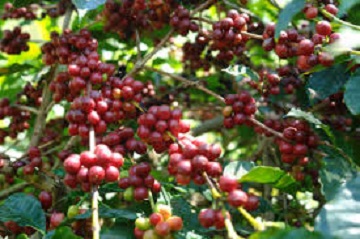
Indonesia is the world’s third biggest coffee producer, but its yield is relatively low. Sulawesi is one of the largest islands in Indonesia and in the world. Tana Toraja is a highland region in the Indonesian province of South Sulawesi, best known today for its exquisite arbica coffee and as an exotic destination for cultural tourism. This region produces Toraja coffee which has unique flavor. Toraja coffee tends to have a relatively low-toned yet vibrant acidity, though usually slightly more acidic and with less body than Sumatran coffees and more earthy than Java Arabica. It has taste of a blend between low acid content and bitter taste. Like Sumatran coffees, the cup profile of Toraja has been called deep and brooding, with muted fruit notes and rustic sweetness and often a pungent spicy quality. The best Toraja coffees come from the area’s small farms north of Toraja at higher altitudes, and this coffee is generally superior to the coffee grown in more southern areas at lower elevations. The successful development of Toraja coffee will not only prosper the people of Toraja, but also support the increasing income and prosperity of the people of South Sulawesi.
A number of different factors can cause agricultural productivity to increase or decrease, one of which is the climate. Based on this, a group of researchers of Bogor Agricultural University (IPB), namely Prof. Dr. Rizaldi Boer and Fitria Hanifia Assamha conducted a research project on the impact of climate change to the diversity results on Tana Toraja coffees.
The objective of the study was to map a potential area for the development of Toraja coffee which is based on the speci?c geographic region. Climate change marked by the shift in rainfall patterns and season as well as the rising temperatures were causing damage to the coffee plant, particularly the coffee supply chain extending from rural origins in the Toraja region of Sulawesi. The Climate mapping of two coffee crops was established, namely arabica and robusta types and how future projections will affect coffee plantations in Tana Toraja District.
According to this research team, for the development of Toraja coffee in the future, various information covering the environmental condition of the areas, to the development of processing industry and socio-economic condition of the community. The value-chain interventions in the coffee sector are unlikely to significantly contribute to improved rural welfare due to the diversified reality of local livelihoods, the nuances of how coffee production is embedded within Torajan culture and economy, and excellent prevailing market opportunities. Therefore, it is necessary to map potential areas for the development of Toraja coffee based on the growing requirements.
Prof. Rizaldi explained that climate change can affect coffee plant growth significantly. Climate change marked by the shift in rainfall patterns and season as well as the rising temperatures were causing damage to the coffee plant they will cause the declining the yield. Some studies say that climate change can disrupt growth and reduce production as well as the quality of coffee.
Meanwhile, Fitria, explained that the study is divided into two stages. For assessing the climate suitability of coffee plants, this study used five climate variables based on available literature. Climate variables are the average air temperature, maximum and minimum air temperature, annual rainfall and the number of dry months. While the impact of climate change on the diversity of results is assessed using regression analysis. Future climate change is assessed based on five climate models (GCMs) under a high emission scenario (RCP8.5).
"The study has indicated that the most suitable area for coffee crops in Tana Toraja will experience the decreased productivity as the areal for the plantation are also decreased. Efforts to address climate change on coffee plant can be done through the application of environment-friendly cultivation technology, both are adaptation as well as mitigation. The productivity of arabica and robusta coffee plants will decrease almost in all sub-districts. Decrease in productivity is estimated to reach about 20 percent for arabica and 40 percent for robusta, "said Fitria. (Wied)