
Male tilapia production techniques by Utilizing Purwoceng (Pimpinella alpina) Extract
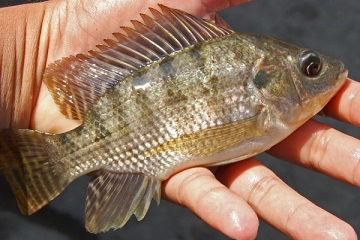
Tilapia culture has been growing over the past decades as an excellent source of high-quality protein. Some of the Tilapia´s advantages are the ability to breed and produce new generations rapidly, tolerate shallow and turbid waters, resist a high level of disease and be flexible for culture under many different farming systems. These characteristics are the main reasons for its commercial success. However, one of them contributes to the major drawback of pond culture: the high level of uncontrolled reproduction that may occur in grow-out ponds. It has made a revolution in the field of fish farming. Masculinization of in Nile tilapia is very important in controlling reproduction and obtaining gender that have faster growth. Synthetic steroids which are commonly used to masculinize but has potential hazards and not recommended for aquaculture. This method is also to optimize the growth of male fish is higher than females. The process of masculinization can be done by inhibiting the action of enzymes that catalyze the change from androgens to estrogen. Inhibition of aromatase can be done by giving androgen hormones from natural and synthetic materials. Natural materials that can be used are pasak bumi, while for the synthetic hormone that is 17a-metiltestosterone (MT).
Researchers from the Bogor Agricultural Institute (IPB) implemented the research program on the masculinization of Nile Tilapia (Oreochromis niloticus) by utilizing Purwoceng (Pimpinella alpina) extract and hormone 17α-metiltestosterone. The group consisted of Rinaldi, Prof. Muhammad Zairin Junior, Dr. Dinar Tri Soelistyowati, and Imron.
Prof. Zairin said, masculinization of in Nile tilapia is very important in controlling reproduction and obtaining gender that have faster growth. Male Tilapia production has an economic importance to its producers and sellers. Jantanization techniques such as with androgen hormones. One of the most common techniques for producing masculinization of in Nile tilapia is steroid-induced sex inversion. This involves the administration of synthetic androgens (to produce male populations). One type of hormone that is often used is 17a-metiltestoteron (MT). However, the use of MT is limited because it can leave harmful residues in fish and the environment.
Prof. Zairin also said, that one of the most common techniques for producing mono-sex populations is steroid-induced sex inversion. Several methods of steroid administration are possible, including injection, microencapsulation, feeding of steroid, and immersion of fry in solutions of extract of pasak bumi plant Eurycoma longifolia. Pasak bumi contained flavonoid 6.1% [11], mineral (Fe, Co, Mg, Zn), saponin, sterol, and isoprenoid that were required to synthesize steroid hormone such as testosterone. Thus, masculinization of Nile tilapia by immersion in extract of pasak bumi plant Eurycoma longifolia may provide effective result and it needs to be compared with synthetic materials (17a-MT).
"The completely randomized design consisted of 0, 20, 40 and 60 milligrams per liter, compared to the control with 0.5 mg L-1 17α-methyltestoterone (MT) and no immersion, each with three replications. while 17a-MT used a dose of 500 μg L with different immersion frequencies of once, twice and three long immersions with an eight-hour immersion," Prof . Zairin.
The result showed that larvae immersion using E. longifolia extract 60 mg.L-1 produced 67.44 % of male significantly different compared to the control without immersion 52.71 % (p<0.05), while control with MT reached 72.87% of male. The use of 17a-MT dose of 500 μg / L with two immersion frequencies resulted in male sex ratio of 87.04 percent and at immersion three times decreased by 4.63 percent.
"Administration of pasak bumi in tilapia larvae immersion improved sex male ratio. In the future, we need to observe the effects of immersion with higher frequency and longer period on masculinization of tilapia. (Wied)

