
A Group of Researchers of IPB Extracted Antioxidant of Sea Leeches of Belitung Island Waters
Science and technology have had a major impact on society, and their impact is growing. By drastically changing our means of communication, the way we work, our housing, clothes, and food, our methods of transportation, and, indeed, even the length and quality of life itself, science has generated changes in the moral values and basic philosophies of mankind. The condition of the increasingly developed world with various technologies has pushed its inhabitants into modern humans. In this age of environmental concern individuals are outwardly interested in the healthy state of their surroundings. The environmental concern of late has been the extent to which human interaction with natural systems is depleting life-sustaining resources. Our desire for a clean environment represents a powerful sense of destiny and hope for the future. Source of pollution are motor vehicles, industries, cigarette smokes, photocopy machine, air conditioner or forest fires. High levels of pollution can be one of the triggers of free radical formation.
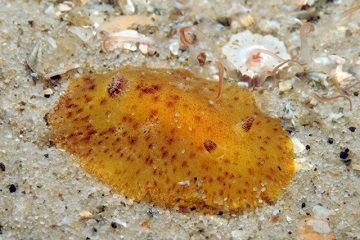
A group of researchers of the Department of Aquatic Product Technology, of the Faculty of Fisheries and Marine Sciences of Bogor Agricultural University (FPIK IPB), namely Rizki Andriyanti, Nurjanah, and Asadatun Abdullah, implemented the research program on the extraction of antioxidant active compounds from marine leeches (Discodoris sp.) From Belitung Islands waters.
Nurjanah explained that free radicals reactive oxygen species and reactive nitrogen species are generated by our body by various endogenous systems, exposure to different physiochemical conditions or pathological states. Free radical is an atom, molecule, or ion that has an unpaired valence electron. With some exceptions, these unpaired electrons make free radicals highly chemically reactive towards other substances, or even towards themselves: their molecules will often spontaneously dimerize or polymerize if they come in contact with each other. Most radicals are reasonably stable only at very low concentrations in inert media or in a vacuum. are chemical compounds that have one or more unpaired electrons in the outer shell making them highly reactive and capable of reacting with proteins, lipids, or DNA. This free radical reactivity can be mitigated by antioxidant compounds.
"Synthetic antioxidants are chemically synthesized petroleum based antioxidants¹ used primarily to “retard lipid oxidation” in order to preserve and stabilize the refined oils and fats within a food product/food system. Synthetic antioxidants are growing at this time feared to give side effects that are harmful to human health. During the processing of food with a high oil content certain natural Antioxidants can be removed from the oils making the products more susceptible to oxidation. From an implication, free radicals and free radical reactions and free radical-induced reactions are now understood as the cause of many diseases pointing to the biochemical origin of disease other than caused by pathogens. The potential of natural antioxidants should be developed to obtain safer antioxidants consumed. One of the potential water resources as a natural antioxidant producer is the marine leech (Discodoris sp.), " she said.
She further added that marine leeches are members of the mollusca phylum group that does not have a shell. Bajo communities on the island of Buton usually consume marine leeches as an enhancer of their stamina (aprodisiak). Previous research results also proved that the sea leeches from the waters of Buton Island contains antioxidants and high anticholesterol.
Phytochemical tests show that the bioactive components contained in the crude extracts of marine leeches from the three polar solvents (ethanol, methanol, and aquabides) include classes of alkaloids, flavonoids, carbohydrates, and reducing sugars. The bioactive component of the hydroquinone and peptide phenol groups are present only in marine leech's aquabidest extracts. (Wied)

