A Group of IPB Mathematicians Utilizing Mathematic Formula to Control Hepatitis Virus
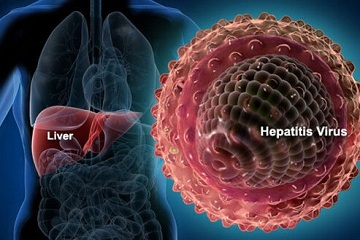
Hepatitis refers to an inflammatory condition of the liver. It’s commonly caused by a viral infection, but there are other possible causes of hepatitis. These include autoimmune hepatitis and hepatitis that occurs as a secondary result of medications, drugs, toxins, and alcohol. Autoimmune hepatitis is a disease that occurs when your body makes antibodies against your liver tissue. These viruses that were initially concealed by flu like symptoms are now known collectively as the disease of Hepatitis. The disease of Hepatitis is actually by six different types of viral infections, namely, Hepatitis A, B, C, D, E, and G. Hepatitis descries the destructive affect of the viral invasion of the body and liver by six and separate viruses. Each type of viral infection varies from one to another in degree of severity. Hepatitis B virus (HBV) infection is still an important public health problem.
Hepatitis B is a potentially life-threatening liver infection caused by the hepatitis B virus (HBV). It is a major global health problem. It can cause chronic infection and puts people at high risk of death from cirrhosis and liver cancer. Hepatitis B prevalence is highest in the WHO Western Pacific Region and the WHO African Region, where 6.2% and 6.1% respectively of the adult population is infected. In the WHO Eastern Mediterranean Region, the WHO South-East Asia Region and the WHO European Region, an estimated 3.3%, 2.0% and 1.6%% of the general population is infected, respectively. 0.7% of the population of the WHO Region of the Americas is infected. It can lead to chronic liver disease and chronic infections and puts people at a high risk of death from cirrhosis of the liver and liver cancer. An estimated 240 million people are chronically infected with hepatitis B (defined as hepatitis B surface antigen positive for at least 6 months). Approximately 780 000 persons die each year from hepatitis B infection — 650 000 from cirrhosis and liver cancer due to chronic hepatitis B infection and another 130 000 from acute hepatitis B. Hepatitis B is an important occupational hazard for health workers. So it is necessary to study the system of hepatitis B virus dynamics by involving two controls, vaccination and treatment.
Realizing the importance to hepatitis issues, a group of researchers of Bogor Agricultural University (IPB) carried out research program on the optimal control of the spread of hepatitis B virus through vaccination and treatment. The group were of the Department of Mathematics of the Faculty of Mathematics and Natural Sciences of Bogor Agricultural University (FMIPA IPB), namely Ukhti Alizah Zekhlin, Toni Bakhtiar and Ali Kusnanto.
Toni expressed, Hepatitis B virus (HBV) is found in blood and bodily fluids. It can be transmitted through semen, vaginal fluids, and blood, and it can pass from a mother to a newborn during delivery. Sharing needles and having unprotected sex increase the risk. Hepatitis B virus is endemic in the human population and hyperendemic in many parts of the world. Once in the liver, the virus reproduces and releases a large number of new viruses into the bloodstream. A hepatitis B infection can result in either an acute infection or a chronic infection. Some adults are unable to get rid of the virus after six months and they are diagnosed as having a "chronic infection.".
Toni said, about two-thirds of people with chronic Hepatitis B (VHB) infection are chronic carriers. Although most people do not experience symptoms, they can appear 60-150 days after infection, with the average being 90 days or 3 months. Some people may experience more severe symptoms such as nausea, vomiting, jaundice (yellowing of the eyes and skin), or a bloated stomach that may cause them to see a health care provider. The rest, develop active hepatitis into a very serious liver disease.
He added that this study studied the dynamics of Hepatitis B virus infection (VHB) under vaccination and treatment administration, where VHB infection is transmitted in two ways through vertical transmission and horizontal transmission. Some numerical simulations of the model are also given to illustrate the results and to find optimal strategies for controlling VHB infections.
The results of numerical simulation showed that the optimal combination of vaccination and treatment is the most effective way to control the hepatitis B virus infection. (Wied)