Lecturer of Faculty of Veterinary Medicine of IPB Shared Tips in Sacrificial Animal
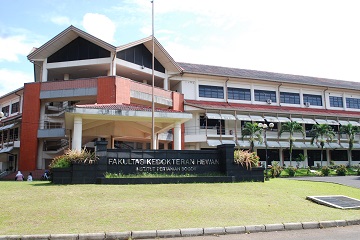
Ahead of the implementation of Idul Adha, the lecturer of Faculty of Veterinary Medicine (FKH), Bogor Agricultural University (IPB), Dr. Denny Widaya Lukman, delivered a glimpse of the implementation of the animal slaughter and guaranteed the quality of the sacrificial meat in Idul Adha.
He said, the slaughter of the sacrificial animal during Idul Adha was not the sharia and ritual, but it should also prioritize the aspect of Halalan Thoyyiban. Meaning that the animal slaughter should be halal qualified, threat the animals before and during the slaughter with ihsan (the popular term of the veterinary medicine was the Animal Welfare), and handle the meat with hygienic (clean, healthy). The meat that was distributed to the rightful persons should be safe, healhty, whole and halal (ASUH).
During the observation of the sacrificial animal slaughtering activities, there were still many cuts that were not ihsan, meaning that the cuts were still ‘torturing animals”, such as (1) the use of a knife which was not sharp, so the cuts were relatively long and not all at once; (2) the use of a disproportionate blade, the blade length of less than 20 cm was used to slaughter the cows; (3) spraying water into the "wound" of the slaughtered place (neck); (4) when the animal had not "died", it was already separated its head or the legs; (5) the animals were dropped by "rough", and some even bent the tail or were striking the eye. These were just a few examples.
Other than that, to ensure the safe and healthy meat, then the animal should be examined for the health before being slaughtered (known as the Antemortem Examination) and examined the health of the meat and the viscera (known as the Postmortem Examination). The examination should be conducted by a veterinarian or veterinary medic (paramedic veteriner) which had been trained.
Dr. Denny said, there were three "critical" things to consider in slaughtering of the sacrificial animals related to the practice of ihsan to the animals and the health and the meat hygiene, namely:
(1) Temporary animal shelters;
(2) Animal slaughtering place; and
(3) Place for handling of the sacrificial meat.
The place of the sacrificial animal slaughter needed to qualify as an adequate animal shelter and to make the animals comfortable and healthy, such as the area of the cage (approximately 1.5 square meter for each cow and 0.8 square meter for each goat/sheep); the animals were protected from the sun and the rain; when the animal was tied, then the strap did not hurt the animal and allowed the animals to move freely, especially to take food and drink.
The animal slaughtering place needed to have the blood container holes (the blood was not discharged into the public sewers, such as sewers/ditches/drains, and the rivers) by making the holes in the ground measuring 0.5 meters x 0.5 meters with the depth of 1.0 meters for the cattle and 0.5 meters for the goat/sheep; available wooden beams for the animal headrests; the animal slaughterers or called "slaughterers " which had been trained of the halal slaughterers (JULIHA); available sharp knives and always awake sharpness; and there was the "physical separation" between the animal slaughterhouses and the animal containers, so that the animals lived with "not see" and "hear" other animals being slaughtered. Importantly, the animals that had been slaughtered were immediately handled further, not allowed.
The meat handling place should be separated from the animal shelters and the slaughterhouses, always kept clean, had a table for cutting up meat. The handling of the edible viscera and meat should be separated (the place, the facility, and the person/officer). The person/officer dealing with the meat and the viscera should maintain the personal hygiene and work cleanly. The meat and viscera were packed separately using a clear or transparent plastic bag or commonly known as a bag of sugar.
Central and local government enterprises in the last ten years continued to socialize the slaughter of the sacrificial animal that was halal thoyyiban that needed to be appreciated "extraordinary", even the Local Government of DKI Jakarta had started the cooperation with FKH of IPB in "fielded" lecturers and students of FKH of IPB in the examination of the sacrificial animals since more than 30 years. In addition to DKI Jakarta, FKH of IPB also cooperated in the examination of the sacrificial animals and the sacrificial meat with Bogor District, Bogor City, Depok City, Bekasi City. The lecturers and students of FKH of IPB were down to the slaughterhouses with the veterinarians and the veterinary workers to carry out an examination of the health of the sacrificial animals before they were cut, the examination of the meat and viscera health, as well as the guidance and dissemination of the sacrificial animal slaughter that was halalan thoyyiban.
"In the past, the response of the slaughtering animal sacrificer to the sacrificial animal examination program is less pleasing, but in recent years it is felt necessary and mandatory by almost all slaughterhouses," he said.
In the last five years, the government built the models of the slaughterhouses in several mosques and conducted the trainings on the sacrifical animal slaughtering that took into account the halal aspect and the animal welfare, including the handling of the hygienic sacrificial meat to the board of Dewan Kemakmuran Masjid (DKM) and the organizer of the slaughtering of the sacrificial animals.
Meanwhile, the Dean of FKH of IPB, Prof.Dr.drh. Srihadi Agungpriyono, said, ahead of Idul Adha later, there was a good committee that would carry out the slaughter of the sacrificial animals requested the Office which was in charge of the Animal Health and the Animal Husbandry in the District/City to provide the training and the examination of antemortem postmortem. FKH of IPB in cooperation with the relevant agency was routinely trained the DKM members or the prospective cutting officer which would be tasked with the implementation of the cutting and the distribution of the meat of the sacrificial animals, so that later it could carry it out properly and correctly.***