
IPB Students Teach Villagers to Grow Honey Pumpkin
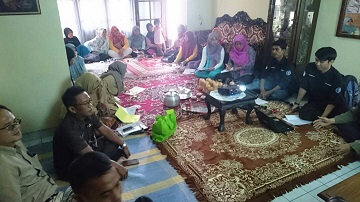
Rural development has resulted in changes, especially in the economic and cultural structures of rural communities, especially farmers. The change is mainly closely related to the pattern of land concessions, relationships and the structure of employment, which ultimately affect the income of farmers. The narrowing agricultural land due to the high demand for land is the impact of rapid development, economic infrastructure needs, and settlements, while the opening of new agricultural land has not met the need.
Apart from the increasingly narrow agricultural land, farming is known to be exhausting and time-consuming, so this causes the community's reluctance to take a direct role in farming. The declining interest of the community in farming will be a threat to the food security and the economy of the community, in contrast to the direction of the President of the Republic of Indonesia, at the Conference of the Council of Food Security in October 2010 in Jakarta, who wants the realization of food self-sufficiency in Indonesia.
This agricultural condition and issue have apparently made Fathur Rahman of Bogor Agricultural University student (IPB) motivated to find a solution. Together with four fellow students of IPB, Fathur is making a movement of community service in ??Mulya Harja, South Bogor. This student of Forest Management Department, Faculty of Forestry (Fahutan) wants to increase the income of Mulya Harja people by utilizing their home yard. In addition, to ensure the government directives in realizing food self-sufficiency, Fathur wants to instill the residents to grow honey pumpkin (Butternut squash,) which is of high nutritional value and a high economic value.
"Resilience and national food self-sufficiency must start from the household. Utilization of home yards for the development of household food is one of the right alternatives," said Fathur.
Planting home yards with Butternut squash to improve the household economy is very possible to do. Butternut squash is known in Indonesia as honey pumpkin. It can be cultivated easily even in pots. With proper care, it can produce good fruit. The growing period of Butternut squash is 85 days. It is widely cultivated overseas, such as Australia, Europe, South Africa and New Zealand. According to one supplier in Jakarta, Butternut squash was first found around 2013 at a high price due to the imports from Australia. The selling price can reach Rp 85 thousand per kilogram.
Butternut squash contains good nutrients for health, high in vitamin A, calcium, folic acid and sweeter flavors than other pumpkins, as well as more pulverized meat textures. It can be processed into a variety of healthy food products and has a high nutritional content. Now it is beginning to become an alternative food trend in some big cities, and sold in supermarkets at very high prices.
The community service activity since last March has entered the first stage of harvesting. This activity in cooperation with Kelompok Wanita Tani (Women Farmer Group) of 36 members. Fathur and his fellow students wants to make the farmer group in Mulya Harja as a model for other farther groups. (Mtd)

