
Students of IPB Recommended Gamelan Degung for Blind Students
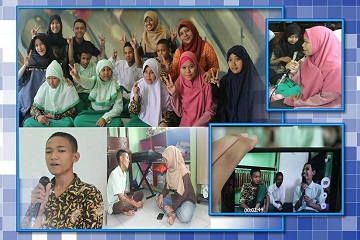
There were many ways to preserve Indonesian local culture, but it took the creativity in managing it. Art, from time to time, became a part of human life. Indonesia with the ethnic and cultural diversity of course also had a variety of art that had its respective enthusiasts. Indonesian art lovers came from various circles. But not everyone could access the way to enjoy the diverse Indonesian arts, one of which was happening to the blind children who were in Bekasi.
“The blind children usually have the senses of the listener that are more sensitive to sound, then we introduce to this gamelan music,” explained Sastia Ardianingtyas, the Chairman of the Team of Student Creativity Program of Community Services (PKM-M) from Bogor Agricultural University (IPB). This PKM-M had members, namely Sastia Ardianingtyas, Faricha Eka Ariani, Kharisma Landing Syahputra, Resty Gessya Arianty, and Farah Fadila.
The gamelan which was selected was the Gamelan Degung type originating from West Java. This gamelan had the characteristics of the pentatonic scales, played by the way of gendingan, and usually displayed as the typical Sundanese music or called with the term of degung. Nowadays, the gamelan art enthusiasts were drowned out among the many modern music arts. Though through the gamelan, a person could also express by actualizing him/herself, of course he/she also preserved the indigenous culture of Indonesia.
The blind students in SLB A and A Ganda Binar Insan Istiqomah Bekasi were introduced with the Gamelan Degung art through the program of Gamelan Interaktif Untuk Tuna Netra Bangga Nusantara (Gita Batara). Of course, the program was a new experience for the students in learning the art of the Gamelan Degung. Eight students from the elementary to the senior high school levels were joined in the interest of Gita Batara under the guidance of the students of IPB. “They are interested because they only know the gamelan, but they are fast learning,” said Sastia.
It had been three of the six stages of Gita Batara program that had been implemented, and all received positive responses from the students and the teachers. Gita Batara Program was expected to be able to increase the students’ motivation in actualizing themselves in the general public.
The Team of Gita Barata besides gave instruction on how to play music, they also provided the motivation in working on children. The process of learning of this Gamelan Degung was also adjusted to the speed of understanding of the children of the program participants. Initially, the time required was longer, but they were fast in applying the game. The Gamelan which was imported from Garut was stored in the school building, so beyond the regular schedule of the program, the students could practice independently if they wished.
The skill playing the gamelan musical instrument that was increasingly unpopular among the community actually was still expected to be known both national and international levels. Various art competition could be followed by the students to improve their skills and just to be a means for self-development. The blind students could also do something unique that could be done by the children in their ages in general. The community was expected to be educated that the shortcomings of the blind children did not limit them to work. (EAW/ris)

