Professor of IPB: Realized the Development Based on the Principles of Islam
Current world economic growth had caused the rate of use of the material and energy to surpass its biogeochemical cycle. As a result, the natural resources experienced the depletion and the degradation of the quality as well as the environment becoming polluted.
If the water that was in the earth was analogous with the water in a drum, the fresh water that we consumed was just one tablespoon (0.003%), the rest was water pent (2.997%) and sea/salty water (97%). Of the spoonful water, we had contaminated it with heavy metal, pesticide, waste of B3, nutrient and organic waste.
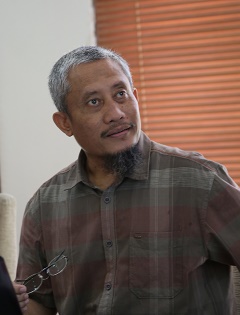
“Another example of the impact of exploitative growth rate is namely from the deforestation data, four species are declared extinct every hour. With the current growth rate, we need 1.5 of the earth. This is because the earth requires 1.5 years to regenerate what we consume for one year,” said the Professor of the Faculty of Agricultural Technology, Bogor Agricultural University (Fateta of IPB), Prof.Dr. Muhammad Romli at the time of the Scientific Oration of Professor in the Campus of IPB Darmaga, Bogor, Saturday (8/10).
Environmental management system that existed today was deemed less effective because the effort made had not touched the root of the problem, namely the fallacy of the human perspective toward the function of the environment and the purpose as well as the role of human in this life.
“Essentially, we have to save the environment, because during this time we are too exploitative, so we do not think about the sustainability. In the Islamic concept, the purpose of the creation of man and jinn is to worship Allah SWT. Human and nature are the universe which is obedient to God’s law. This is what makes a Muslim does not do those things. In essence, we live to please Allah,” he said.
Terrestrial ecosystem was in addition to functioning as a resource provider, and also the disposal of the remaining activities. With the principle of size and balance, the human should not demand more resources than having been provided. The human also could not remove the waste in the amount and rate that exceeded the ability of the terrestrial ecosystem to neutralize it. (zul)