Prof.Dr. Euis Sunarti: Indonesia, the Disaster Laboratory Country
Indonesia is extremely vulnerable to natural disasters, and this country is even known as the disasters laboratory. Why, because Indonesia lies in the path of the volcanic (Ring of Fire) and in the active crust of the earth, where the Pacific Plate meets many surrounding plates. Those tectonic plates collide and cause movement of Indonesia’s dynamic region. Analysis of disaster risk shows that Indonesia is among the zone area prone to natural disasters, so it automatically shows the amount of vulnerable families affected by the disaster.
Sumatra, Java and East Nusa Tenggara (NTT) the areas with the highest risks zone that suffers earthquakes of intensity. Whereas Java, Sumatra and Sulawesi are high risk tsunami zone and erosion. . In addition, Java, Sumatra and NTT are areas with the highest risk of landslides. The highest zone areas for drought risk is Java and Sumatra, and finally Java, Sumatra and Borneo is the highest zone area for floods.
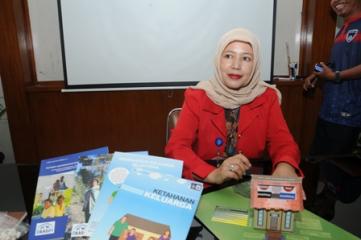
This data was presented by Professor Holder of the Faculty of Human Ecology of Bogor Agricultural University (FEMA IPB), Prof.Dr Euis Sunarti, during the press conference at the Baranangsiang, Bogor, on Thursday, 4 June 2015, prior her scientific oration. According to her, the results of the study show the importance of families and communities to develop tough resilience to withstand adverse impacts from any disaster. Poor families suffer higher percentage of loss and their recovery ability is low and long. Natural disaster risk is intimately connected to processes of human development. Disasters put development at risk. Thus, it disturbs the national development program for national welfare.
"The evidence revealed the very limited coping strategies and disaster recovery capabilities for victims’ families, while social support from extended family and neighbours are equally limited because in general are in the same socio-economic status. So disaster has disturbed welfare achievement programs of the families, and even their effort to meet the basic needs of the family, namely food security, "he said.
A concern for resilience posses by families to withstand adverse impacts from any disaster, is not instantly existed by families but rather by a long-term processes built-in in their daily lives. The reality remains that resiliency is demonstrated within individuals who can effectively and relatively easily navigate their way around crises and utilize effective methods of coping. The family resiliency component is belief system (mainly related to the value / meaning to the disaster / catastrophe), the quality of communication, and organizational patterns in the family.
"Currently, public awareness and disaster management agencies in the disaster areas would be improved its performances. They have increased their capacity, but public do not aware whether they are ready to serve. Based on the evaluation, most BNPB in the disaster areas have never been able to perform independently. However it doesn’t mean that no progress have been achieved, though very little have been made. In addition, improving their mental toughness is necessary for safety culture and understanding of the risk of disaster. The Effectiveness for emergency response and post-disaster related to disaster risk reduction must be improved. Therefore. It is deemed necessary to integrate or coherence between disaster risk reduction with development programs to achieve the SDGs, "he said. (Wied)