Dr. D. Iwan Riswandi: Vocational School Answered the Challenge of MEA
Economic Community of ASEAN (MEA) agreed to impose the single market by the end of 2015. The agreement of the implementation of MEA was followed by 10 ASEAN countries which had a total population of 600 million people, and around 43 percents of population were in Indonesia. Meaning, the implementation of MEA would put Indonesia as the large main market, both for the flow of goods and for the investment, so that the readiness of human resources (HR) became a very strategic issue.
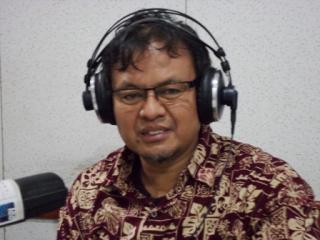
This was conveyed by Deputy Director for Resources, Cooperation and Development, Diploma Program, Bogor Agricultural University (IPB), Dr. D. Iwan Riswandi, in a broadcast of Expert Dialogue of IPB at RRI Bogor, Tuesday (31/3).
It was said, MEA not only opened up the flow of goods or services but also the labor market of professionals. This would make a stiff competition. Then how to prepare a good HR?
Indonesia, explained Dr. Iwan, had the opportunity to prepare a superior workforce, one through the vocational education organized by IPB. This was in accordance with the Government Regulation No.66 in the year of 2013 about the Statute of IPB, which described the authority of IPB organizing the academic track, professional and vocational.
The vocational education was different from the academic education and the professional education. The vocational education was the higher education which prepared the graduates to have particular expertise in entering the work environment and the development of applied science. In the vocational education, the students were trained to be able to solve the problem and skill to seek a breakthrough practical innovation encountered in the workplace and to develop the business.
The vocational education would produce the graduates who were ready to work, to try to find a practical application and innovation, and to have the high flexibility to solve problems. The vocational education aimed to prepare the students to become the members of the community having the ability of professional experts.
The teaching load on the vocational educational program more emphasized on the aspects of skills and expertise compared with the theoretical aspect. The vocational education encouraged the proactive improvements to make adjustments with the changes in the environment and was able to adopt the anticipatory strategy in the long term.
Vocational educational pattern applied was 70-20-10, i.e. 70 percents of work experience, 20 percents of another way of learning, and 10 percents to attend the formal school and to read. With such learning patterns, explained Dr. Iwan, would be more attractive for the employers to obtain a qualified workforce, as required. (wrw)