OCEAN ACOUSTIC TECHNOLOGY TO SUPPORT THE DREDGING ACTIVITY
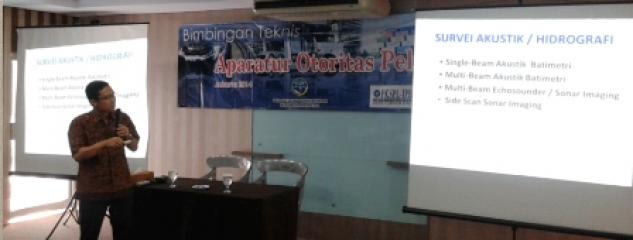
Sedimentation in the port happened every time. Siltation of navigation channel could interfere with the navigation measurements. ”The role of ocean acoustic technology lies in a survey conducted during the dredging work,” said Dr. Henri Manik as the Instructor in the Technical Guidance for Administrative activities of the Port Authority of the cooperation between PKSPL IPB and Directorate General of Sea Transportation, Ministry of Transportation.
The purpose of use of the ocean acoustic technology was to find out the depth of limit of the base port to be able to be adjusted to the specified engineering design. Besides, it was to know the type of seabed material, the geotechnical aspect, and the calculation of the volume of material to be dredged.
In its material of Ocean Acoustic, the expert of IPB revealed that the ocean acoustic survey conducted covered the positioning survey, the bathymetry (sounding) with a single beam method, the multi beam and seabed imaging with the instrument of side scan sonar and sub bottom profiler. From the result of the survey, it would be calculated the volume of material to be dredged. The calculation of the volume consisted of the component of the survey area and distance and the selection method of calculating the volume of material needed to be calculated carefully. This was because it related to the dredging cost to be dredged.
Determining the type of seabed material was obtained from the acoustic backscattering value computation which had been developed by Dr. Henry Manik. Classification of the type of base material with the acoustic techniques could save the cost of the survey and could assist in determining the type of the tool rake would do. Knowledge of the importance of the physical properties of seafloor sediments supporting the geotechnical aspects and ocean engineering needed to be known by each port authority official.
With the dredging activities, it could assist in the safety of shipping in the port groove. It was expected that the role of ocean acoustic survey could be more optimal with oceanographic and meteorological surveys in the deep sea dredging work.
In the discussion session, some heads of ports invited to cooperate in the dredging activities, mainly in the application of ocean acoustic technology in the bathymetry survey and the calculation of the volume of dredged material.