Tomcat: From Natural Enemy of Brown Planthopper to Anti-Cancer
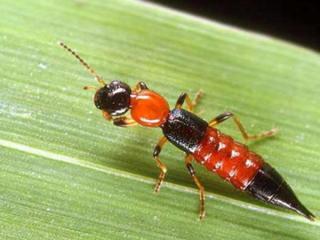
Reports about tomcat have recently flooded a lot of mass media. This insect is considered to have appeared widespread in Surabaya, Madison, Pati and Jakarta.
According to the insect expert from the Department of Plant Protection, Faculty of Agriculture, Bogor Agricultural Institute (IPB), Dr. Hidayat Purnama said the insect tomcat is actually not as bad as its reports in the mass media. "This insects has more advantages that its bad reports," said Dr. Purnama in the Coffee Morning on Friday (30/3) with reporters at Baranangsiang Campus of IPB.
The insect, or originally called Paederus fusipes, is a natural predator of brown planthoppers. One tomcat can eat seven brown planthoppers a day. Further, Dr. Purnama said the native habitat of the insect is in ??rice fields. Not only in Surabaya and Madison, but anywhere where there are rice fields, then we will easily find lots of tomcats.
In addition to playing the role as the natural predator that can control the pest of plant hopper on rice, tomcat, in the medical world, contains pederin which can function as an anti cancer.
Dr. Mira Ikawati, Sp.KK who was present in the event, confirmed that pederin can inhibit DNA and is potentially an anti-cancer, but no further research in this regard. Dr. Mira advised to avoid the irritation resulting from the exposure to pederin from the tomcat, not to beat the insect on our body but simply expel from our body to avoid the release of pederin from the insect. "The skin irritation usually occurs not because of the bite or sting, but rather the smashed tomcat on the skin surface," explained Dr. Mira.
As for the recent outbreak of tomcats a short time ago, Dr. Purnama thinks it may be caused by its natural habitat that has been disturbed, so the insects migrate to the community settlement. Dr. Purnama suggests that when many tomcats are found in residential areas, night lighting be reduced. (Mtd)