Release of MPDNA Research Results, IPB University Reveals Recovery Strategies for the Agriculture and Tourism Sectors after the Cianjur Earthquake Disaster
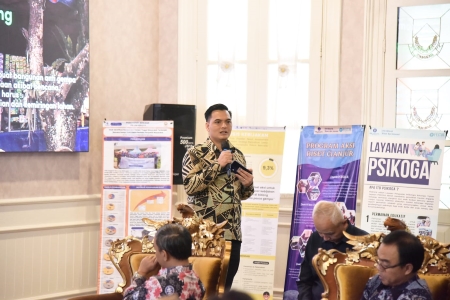
The earthquake that has struck Cianjur Regency, West Java, has caused losses to the economic sector, especially in the fields of agriculture and tourism. Effective government policies are needed to be able to produce appropriate post-earthquake recovery programs for the community and affected parties.
This condition made IPB University initiate one of several scientific studies devoted to helping the society and government of Cianjur after the earthquake disaster. This study aims to produce recommendations for post-earthquake recovery strategies in Cianjur in the agricultural and tourism economic sectors using the Modified Post Disaster Need Assessment (MPDNA) method.
MPDNA is a modified PDNA developed with adjustments to local characteristics and specific types of impacts. In this case, the research focused on the agriculture and tourism sectors.
The research was conducted by a team of IPB University lecturers from the School of Business consisting of Muchamad Bachtiar, STP, MM as the team leader, and Dr Nimmi Zulbainarni, Dr Hartoyo, Dr Popong Nurhayati, and Fithriyyah Shalihati, SE, MM as members. Several IPB University students also contributed to this research, namely Ramadhova Mahros Majdi and Dindi Ayu Agustini (School of Business), Muhammad Resta Destyana (Faculty of Forestry and Environment) and Anisa Nurazizah (Faculty of Agriculture).
"The data collection process was carried out with in-depth interviews with the government, community leaders and disaster victims in the three sub-districts with the worst impact, which were District Cilaku, District Cugenang and District Warungkondang," said Muchammad Bachtiar, STP, MM as the head of the research team.
He added that there was a matrix used as a reference during the interview process. This was done so that the interview would be structured.
"The column part of the matrix consists of three main sectors that are the scope of this research, namely agriculture, livestock-fisheries and tourism," he explained.
Meanwhile, the matrix rows consist of four clusters consisting of infrastructure, product and service needs, government policies and future risks that will be identified in the post-earthquake impact on each cluster in the agriculture, livestock and fisheries, and tourism sectors.
Muchammad Bachtiar said that the interview process was conducted directly on December 26-30, 2022. There were 38 respondents to be questioned regarding the impact of the earthquake in Cianjur. The results obtained were then formulated into short-term (<6 months) and long-term (>6 months) recommendations.
"In the agricultural sector, there are short-term recommendations based on conditions found in the field. The majority of farmers are currently losing focus in managing their agricultural land. This is because the basic needs of their lives are still not well met due to the earthquake disaster," he said.
As a result, he continued, many farms are abandoned. Therefore, short-term efforts are needed to fulfill the basic needs of farmers so that they can live calmly and focus on working again.
"For the livestock and fisheries aspects, there is a need for good care for livestock such as providing proper food, vitamins, repairing cages and others. Because some farmers experienced livestock that died due to stress," he said.
As for long-term recommendations for the agricultural sector, government assistance is needed to create new and proper irrigation channels. This is because there are several reports from farmers that irrigation infrastructure is damaged and dry.
"There are also several reports that the profit-sharing system between farm laborers and landowners does not have a fixed standard. In this case, the government needs to standardize the profit-sharing system between farm laborers and landowners in order to create a fair and effective system," Muchammad Bachtiar added.
Meanwhile, in the tourism sector, it was found that tourism revenue in Cianjur tends to be stable and even increase due to the volunteers who come. Local residents also prefer to travel in their own area since after the earthquake. However, there needs to be an effort to increase the trust of outside tourists to come back to Cianjur because there are still not many outside people who come to Cianjur for tourism after the earthquake.
"Long-term recommendations from the development aspect, tourism must make anti-earthquake buildings that aim to minimize accidents due to disasters in the future." According to him, developers must consider land conditions such as height and slope of the land if they want to build a tourist site.
"With the delivery of this action research, IPB University hopes to help and support post-disaster recovery in Cianjur Regency," he concluded. (IAAS/RUM)