
IPB Researchers Utilize Bean Sprouts Waste to Lower Lamb Cholesterol
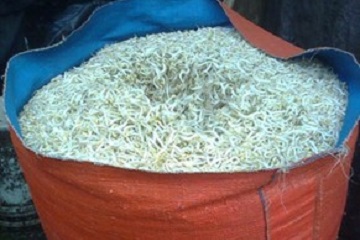
Forage is the main feed of ruminant livestock and the most important factor to support the cultivation of livestock because it affects the body weight of livestock. However, the low availability of forage in dry season but abundant in the rainy season become the constraints in Indonesia. Giving forage during the dry season can be overcome by the use of alternative feed from the market vegetable waste such as bean sprouts.
Three researchers from the Department of Animal Production and Technology, Faculty of Animal Science, Bogor Agricultural University (Fapet IPB), Sri Rahayu, H. Sunando, and M. Baihaqi, conducted a research to observe the behaviour and growth of Garut young ram with intensive maintenance given bean sprouts waste at different feeding times.
"The potential of bean sprouts waste in Bogor city is about 1.5 tons per day. Nutritious forage can determine the growth, reproduction and health of livestock. Forage from bean sprouts is expected to meet the nutrients needed by Garut sheep," said Sri.
The researcher kept the Garut ram aged average 5-7 months in treatment cages. They gave different feed treatments, including addition of bean sprouts waste at different feeding times, namely in the morning and evening.
"Giving 40 percent of bean sprouts waste to Garut sheep forage with different feeding times could improve the growth and post-harvest performance. The addition of daily weight gain (pbbh) of the sheep fed with the bean sprouts waste (140.94g/ek/h) was higher than those given grass as forage (76.61g/ek/hr)," she explained.
Post-harvest performance showed that the addition of bean sprouts waste to the forage had a better effect on carcass and meat quality, except fat content, compared to grass forage. However, the afternoon feeding time tended to decrease carcass and meat fat content. The content of fatty acids, especially unsaturated fatty acids (PUFAs), was higher in sheep fed with grass forage, otherwise SFA saturated fatty acids were higher in sheep given bean sprouts waste.
"Lamb cholesterol level fed with bean sprouts waste in the afternoon tended to be lower than in lamb given such forage in the morning and given a grass forage in both morning and afternoon," she said.
Economically, giving bean sprouts waste with the feeding time of afternoon to Garut sheep was able to depress the cost of feed, labour and other cost, thus, the revenue and profit can be increased overall.
"Physical bean sprouts waste and its nutrient content both have good potential as livestock feed, especially for sheep breeding. The addition of bean sprouts waste in forage fed in the afternoon could improve productivity of Garut sheep without reducing the level of prosperity," she said. (TK)

