
A Group of IPB Researchers Created Hard Capsules Made of Skin Tuna Fish Gelatin
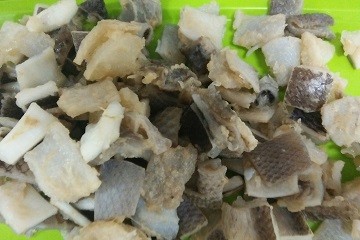
Gelatin or gelatine is a translucent, colorless, brittle (when dry), flavorless food derived from collagen obtained from various animal body parts. Gelatin is an irreversibly hydrolyzed form of collagen, wherein the hydrolysis results in the reduction of protein fibrils into smaller peptides, which will have broad molecular weight ranges associated with physical and chemical methods of denaturation, based on the process of hydrolysis. Gelatin's ability to form strong, transparent gels and flexible films that are easily digested, soluble in hot water, and capable of forming a positive binding action have made it a valuable commodity in food processing, pharmaceuticals, photography, and paper production. In addition, gelatin is also widely used in the field of pharmaceuticals, namely one in the manufacture of hard capsule shell or soft shell. Dr. Mala Nurilmala, a lecturer from the Department of Aquatic Product Technology, Faculty of Fisheries and Marine Sciences, Bogor Agricultural University (IPB) stated that the gelatin used in Indonesia is still imported products.
In addition, the imported gelatin is still widely derived from mammals such as cattle or pigs. Gelatin is a protein substance derived from collagen, a natural protein present in the tendons, ligaments, and tissues of mammals. It is produced by boiling the connective tissues, bones and skins of animals, usually cows and pigs. Based on this, there has been a growing interest for finding an alternative source of raw materials for gelatin production. In recent years gelatins from fish and edible insects provide an alternative source that is acceptable for halal (Muslim) and kosher (Jewish) products. Therefore, a gelatin alternative is really needed to substitute the imported one which is unlawful to use for us.
Based on that, Dr. Mala and Dr. Agoes Mardiono Jacoeb and Sendy Chrisman Adinugraha conducted research to analyse the potential of tuna skin gelatin as a hard capsule material. This research was part of Research of Foreign Cooperation and International Publication Program of Kemenristekdikti RI.
Gelatin produced from fish processing by-products is a potential alternative to mammalian gelatin. Fish processing generates solid wastes that can be as high as 50–80% of the original raw material. About 30% of the tuna skin wastes consists of skin and bone with a high collagen content. Fishery waste in the form of tuna skin can be processed into gelatin to be further processed and utilized as a hard capsule material.
"So far, tuna skin waste is exported. Fishery by-products, produced by modern and traditional industries in Indonesia, have not been utilized optimally, thus leading to the production of waste. In fact, tuna skin waste is potential as a hard capsule material," she said.
Dr. Mala also stated that one of the ingredients criteria for the manufacture of hard capsules should be soluble after entering the body. The hard capsule derived from the gelatin of tuna skin has four digits of digestibility faster than the hard capsules of conventional gelatin or gelatin derived from mammals. it appeared that gelatin from the skin of tuna fish had almost occupied the same colour with commercial gelatin. It can be concluded that the characteristics of gelatin from the skin of tuna fish using various concentration of acetic acid solution such as 3%, 6%, and 9% are good quality and in accordance with the Indonesian National Standard.
The study has indicated that gelatin from tuna skin has characteristics that are still in accordance with commercial capsule standards. 20% gelatin concentration was the standard concentration to produce the best hard capsule, with its body length 19,40 ± 0,679 mm, cap length 12,79 ± 0,014 mm, weight 0,068 ± 0,003 g, crushing time 4,09 ± 0,071 minute, pH 5,915 ± 0,035, and water content 12,04 ± 0,071%. (Wied)

