
A Group of Students of IPB Created Environmetal Friendly Styrofoam Made of Alang-alang
Plastics are being used all over the world. From drinking cups and disposable silverware to parts for automobiles and motorcycles, plastics are continuing to rise. Polystyrene is a petroleum-based plastic made from the styrene monomer, some people buy and use them for disposable products. As a hard, solid plastic, it is often used in products that require clarity, such as food packaging and laboratory ware. Most people know it under the name Styrofoam, which is actually the trade name of a polystyrene foam product used for housing insulation. Styrofoam packaging or better known as foam plastic is very often used to wrap foods, especially fast food. Styrofoam packaging has the advantage of being practical and durable that makes the merchant interested in using it. The biggest environmental health concern associated with polystyrene is the danger associated with Styrene, the basic building block of polystyrene. Styrene is used extensively in the manufacture of plastics, rubber, and resins. However, The production, use, and disposal of Polystyrene causes adverse environmental and health effects. Prolonged effects of chronic styrene exposure that many users face include: depression, chronic headaches, fatigue, and weakness, and minor effects on kidney function and blood. Although many people have heard that Styrofoam is detrimental to the planet, few understand how styrofoam harms the environment, as it un-degradable object.
In order to sustainably use styrofoam, a non-biodegradable product that fills up our landfills and that is made from the non-renewable resource crude oil, it needs to be recyclable and reusable in its post-consumer form. Biodegradable foam packaging is a new alternative that can be used as a substitute for Styrofoam, as it is made from natural and renewable resources. foam is an environmentally friendly packaging that can be degraded by bacteria and other microorganisms. It is therefore necessary to develop packaging such as styrofoam but environmentally friendly and also safe for health.
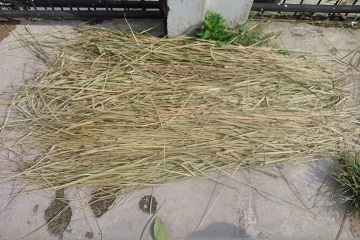
To answer such hot issue on the degradable styrofoam, Dedi Saputra Jaya, student of Bogor Agricultural University (IPB), who was also Chairman Program Kreativitas Mahasiswa Penelitian (PKM-P Student Creativity Program, Research), together with his team, namely: Gulvi As'ari Tri Kusuma, Nabila Sabrina Silvani, Fathur Rahman and Nanang Muchtar, implemented the research program on the production biodegradable foam made of modified tapioca starch – based and alang-alang (Imperata cylindrica) nanoselulosa.
"This idea came to them due to their concern on the widespread use of styrofoam for food packaging. Styrofoam has become such an accepted everyday product that people rarely stop to realize that it is made from polystyrene, a petroleum-based plastic. The packaging is hazardous to human health and can interfere with the environment and can cause cancer because Polystyrene is a petroleum-based plastic made from the styrene monomer, "said Dedi.
Dedi developed food package which almost looks like styrofoam but is safe to use and easily degraded by the environment. Biobased products such as starch suitable for use as raw material for making biofoam. However, to improve the physical properties of starch needs to be modified first. To improve the physical and mechanical properties of biofoam, other materials such as nanoselulosa, plasticizer, and other additives are to be added.
Starch based plastics are mainly harvested from some food crops, including cassava. Starch when harvested is turned into a white, granular product. “starch can be processed directly into a bioplastic, but because it is soluble in water, articles made from starch will swell and deform when exposed to moisture, limiting its use”. Starch is one of the potential ingredients for biodegradable foam. Starch generally has advantages, namely renewable, abundant, and easily degraded. "We use starch because starch is easy to get and harmless. The nanoselulose is actually processed from weed. These unwanted plants turned out to contain a lot of cellulose that can be utilized, "said Dedi.
Steps in implementing the research program planned by the group included the preparation of raw materials, starch modification, insulation and making of alang-alang nanoselulosa, and the production process and analysis of biodegradable foam produced.
One of the easiest ways to keep plastic out of the landfill is to refuse styrofoam, as it harms the environment, as well as it is un-degradable object. Although styrene and its derivatives are useful, they pose significant environmental problems as styrene has been found to be toxic. Create plant-based materials which would allow us to produce a biodegradable and compostable type of plastic, for environmental protection and our health. (Wied)

