A Group of Students of IPB: the Indonesian Farmers Are Still Far From Prosperous
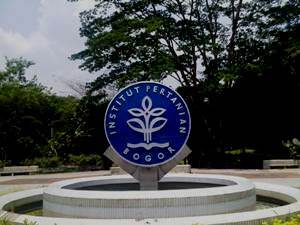
With its vast and abundant fertile soils Indonesia is a major global key producer of a wide variety of agricultural tropical products, therefore Indonesia is noted as agricultural country. Although the share of agriculture sector contribution to the national gross domestic product has declined significantly in the last half century, today it still provides income for the majority of Indonesian households. Agricultural sector plays a strategic role in the process of economic development of Indonesia. According 2013 census implemented by the Indonesian Central Bureau of Statistics (BPS), agricultural sector provides jobs for around 26 million households of Indonesia, which means more than 100 million people rely on agriculture. Although most people in Indonesia work in agriculture, however some agricultural commodities still needs to be imported from abroad. This is also the cause of the low welfare of farmers in Indonesia.
As the agrarian country Indonesian economy is based on producing and maintaining crops and farmland. The increased population, must also be followed the increased agricultural products especially foods. The increase in food prices should become heaven for farmers, because their income will be easily become higher. Unfortunately, it has become a boomerang for their welfare because most farmers in Indonesia is tenant farmers. The statement is not just a statement without data. Five students of the Faculty of Economics and Management of Bogor Agricultural University (FEM IPB) joined in the Student Creativity Program had implemented research program to analyse the Indonesian farmers' economy. Those students were Dinda Aisyah Najmi, Santi Rahayu Wijayanti, Hanifah Dwiyana, Alif Fahmi Alim, and Tri Juli Nabilla.
Utilizing the secondary data, the group revealed the astounding results. The dependence of imported agricultural commodities becomes a recurring problem every year. Very ironic as an agrarian country with an abundance of natural resources, Indonesia must import 29 food commodities. The commodities are rice, corn, soybeans, wheat and machinery, wheat flour, sugar, sugar cane, cow's meat, chicken, salt, butter, cooking oil, milk, onion, garlic, coconut, coconut palm, pepper, tea, coffee, cloves, cocoa, chili, dried chili, preserved chili, tobacco, cassava, potatoes. In fact, Indonesia could feed its own people with its own production, some of those food commodities should not be imported.
It is unbelievable that Indonesia, which has high potential to produce salt, still has to rely on import for part of its salt requirement. In fact, Indonesia is an archipelago composed of many islands, which explains why it has the fourth longest coastline in the world Indonesia Moreover, effective the year 2010, Indonesia has to face the ASEAN-China Free Trade Area (ACFTA). Then at the end of 2015, with the activation of ASEAN Economic Community (MEA), more and more agricultural products from abroad including ASEAN and China enter Indonesia, "said Dinda .
This is exacerbated by the declining number of workers moving from the agricultural sector to the trade sector. In February 2016, BPS reported that 31.74 percent of Indonesian workers or 38.29 million people were regularly engaged in farm work. Compared to February 2015 the total number workers decreased, the number of workers in the agricultural sector reached 40.12 million. Within one year, nearly two million agricultural workers moved into other sectors. If the trend continues, there will be possibility that the number of farmers or workers in the agricultural sector in Indonesia will shrink in the next 20 years. In addition, poverty rate of most rural people who are farmers or agricultural worker increased into 17.94 million in 2015, from 17.73 million in 2014. The high level of rural poverty is due to development policy bias in favor of urban and industrial sectors, yet the allocation budget for agricultural sector dropped dramatically.
The average of allocated budget for seed subsidy under the State Budget (APBN) over the last ten years has been 1.97 percent per year of total non-energy subsidy. In the average, it has been 0.46 percent per year of total subsidy. While the average allocated subsidy for fertilizer under the APBN is 31.32 percent of non-energy subsidies, and it is 9.35 percent of the total subsidy. The total amount of seed subsidy is too small for such agrarian country. The explanation show us the partialities of a government for the agricultural development compared to the industrial development in Indonesia. (Wied)