Lasting Three Years, The Secret Behind IPB University’s Premium Lamb Rendang Innovation
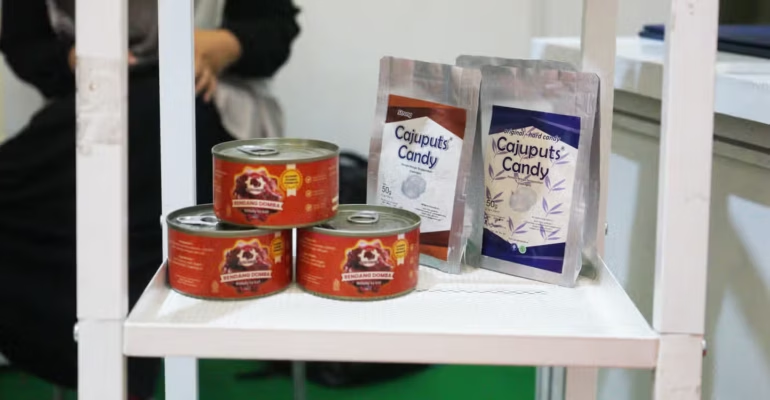
The premium lamb rendang developed through research at IPB University has been proven to keep for up to three years. This innovation stems from research conducted by Prof Asep Gunawan and a team of researchers from the Faculty of Animal Science at IPB University beginning in 2016.
The Big Idea Behind Canned Lamb Rendang
The development of premium lamb rendang was driven by challenges related to lamb consumption, which lamb is known for its strong aroma, tough texture, and high fat and cholesterol content, which consumers often complain about.
“To address these challenges, the team used SheepLight technology, based on loop-mediated isothermal amplification (LAMP), to detect genetic markers in the selection of premium lambs. The goal is to create meat that is more tender, has a milder aroma, and features a better fatty acid profile,” said Prof Asep, the innovator.
Additionally, rendang was chosen as the commercialization product because it is internationally recognized and has a strong identity. This approach is expected to result in quality differentiation that becomes the final product’s competitive advantage.
The development of premium sheep involves groups of farmers and stakeholders in seven provinces: West Java, Central Java, East Java, North Sumatra, Jambi, Central Sulawesi, and East Nusa Tenggara. The collaboration covers breeding, livestock selection, farming guidance, and strengthening of husbandry management.
The Secret Behind Three Year Shelf Life and Technology
The next challenge was controlling the processing. Prof Asep explained that to ensure a long shelf life, canning is combined with thermal sterilization.
The process includes selecting raw materials, preparing the meat, marinating it in rendang spices, filling the cans, and hermetically sealing the packaging. The product is then sterilized in a retort (sterilization machine) using an appropriate combination of temperature and time.
As a result, the product can be safely stored at room temperature without refrigeration, opening up distribution opportunities to areas with limited refrigeration facilities. This enables widespread distribution to regions with limited refrigeration infrastructure.
“Through premium lamb rendang, we want to demonstrate that livestock breeding research can provide economic value, open up new market opportunities, improve farmers’ welfare, and introduce innovative Indonesian food products to the world,” said Prof Asep.
Targeting the Global Market
As the upstream sector strengthens, market potential is being explored through the Indonesian diaspora community and Asian food consumers, particularly in Southeast Asia and the Middle East. These efforts open opportunities for premium lamb rendang to reach a broader market while increasing the added value of local livestock products.
“For us, the success of an innovation is not only measured by scientific publications or the technology produced, but also by how much benefit it brings to society.
Through the results of this research, we can provide economic value, open up new market opportunities, improve the welfare of livestock farmers, and introduce Indonesia’s innovative food products to the world,” he said. (*/Rz) (IAAS/KQA)