A Beautiful Environment Is Key to a Green Campus: IPB University Professor Highlights the Role of Green Open Spaces in Reducing Temperature and Pollution
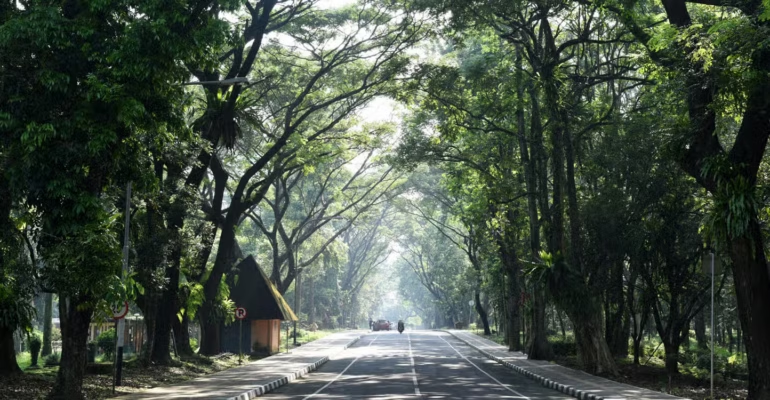
Green open spaces (RTH) are one of the pillars of a healthy and sustainable green campus environment.
Prita Ayu Permatasari, SP, MSi, a lecturer in the Department of Landscape Architecture (ARL) at IPB University, explained that green open spaces provide various ecosystem services whose benefits are directly felt by the academic community. These benefits range from energy efficiency and water conservation to human health and the preservation of biodiversity.
“Green open spaces play a vital role in supporting the green campus concept through the ecosystem services they provide, such as lowering air temperature, absorbing pollution, reducing surface runoff, enhancing water conservation, and supporting biodiversity conservation,” she explained.
A Cooler Campus
One of the tangible benefits is a cooler campus environment. She explained that trees help reduce exposure to solar radiation through their canopies, while the process of evapotranspiration helps lower temperatures around the vegetation.
“These conditions make the environment more comfortable and have the potential to reduce the need for air conditioning,” she said.
Cleaner Air
Not only that, but vegetation also plays a role in maintaining air quality. Plants absorb carbon through photosynthesis, while certain parts of plants can trap dust particles and help reduce the concentration of pollutants, such as nitrogen dioxide. According to Prita, proper tree planting is part of the effort to create a healthier campus environment.
Landscape Design Maximizes Benefits
To optimize these ecological benefits, she emphasized the importance of well-planned landscape design, including ensuring connectivity between green spaces through vegetation corridors along roads and across the campus.
Plant selection is also tailored to their specific functions. Broad-canopied trees provide shade, while the right vegetation mix can help reduce exposure to pollutants. The use of native plants supports plant adaptation while preserving local species.
She also considers the connectivity of green open spaces with blue open spaces, such as rivers and lakes to be important. Integrating the two can help protect habitats, support water conservation, and reduce the risk of flooding.
Eco-Friendly Mobility
Landscape design also supports eco-friendly mobility through shaded pedestrian and bicycle paths. Plants along these paths are selected with safety in mind, for example, those with roots that do not damage infrastructure or endanger road users.
“Proper vegetation planning can help lower air temperatures, reduce pollution, prevent flooding, and create a comfortable environment for pedestrians,” she said.
According to her, the success of a green campus is not only measured by the number of plants or the size of green areas, but also by the landscape’s ability to fulfill its ecological functions.
“Improving connectivity between green open spaces through green corridors, selecting appropriate plants, and conserving habitats can help improve the quality of the campus environment,” she concluded. (AS) (IAAS/KQA)