IPB University’s Reklatam Promotes the Transformation of Post Mining Lands into Productive Landscapes
Former mining sites have the potential to be developed into productive areas that support food, water, and energy security through reclamation approaches tailored to the characteristics of the land. IPB University is promoting this transformation through interdisciplinary research, technology development, and collaboration with the government and the mining industry.
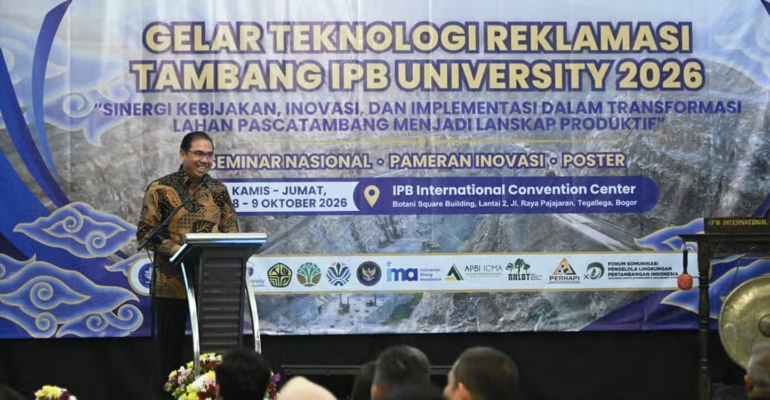
These efforts are a key focus of the Mining Reclamation Technology Conference organized by the Research Center for Mine Reclamation (Reklatam) and the International Research Institute for Environment and Climate Change (LRI-LPI) at IPB University, held at the IPB International Convention Center in Bogor (10/8–9).
IPB University Rector, Dr Alim Setiawan Slamet, explained during the event that regulatory developments have opened up broader opportunities for the reclamation of post-mining land. He referred to the Minister of Energy and Mineral Resources (ESDM) Decree No 1827 K/30/MEM/2018, which was subsequently reinforced by ESDM Ministerial Decree No 344 of 2025.
“These regulations open the door for former mining sites outside forest areas to be reclaimed in various forms, including for agricultural cultivation,” he said. Such utilization can include the development of rice paddies, cornfields, agroforestry, cattle ranching, and even fisheries.
According to Dr Alim, this diversification of land use provides opportunities to support the community’s economic activities while also ensuring the restoration of environmental functions.
In addition to developing land use, IPB University is also conducting studies on ecosystem restoration. Through the Center for Reclamation Studies, established in 2008, IPB University is developing high-quality native tree species, such as ulin, ebony, merbau, and meranti, to support revegetation on former mining sites.
The Director General of Minerals and Coal at the Ministry of Energy and Mineral Resources, Dr Ing Tri Winarno, emphasized that the use of post mining land must be planned from the very beginning of mining operations.
He highlighted the importance of ensuring slope stability, managing abandoned mine pits, and companies’ obligations to carry out reclamation.
According to Dr Tri, post mining land outside forest areas can be developed through other forms of reclamation, while land within forest areas must be restored in accordance with its designated purpose. Thus, innovation in land use must go hand in hand with compliance with regulations and environmental protection.
The Chair of the 2026 IPB University Mining Reclamation Technology Conference, Prof Sulistiono, said this forum brings together the government, industry players, academics, researchers, and the public to share knowledge and innovations in reclamation.
Through this collaboration, Prof Sulistiono hopes that reclamation will not stop at the physical restoration of the land, but will also result in a landscape that is safe, ecologically functional, and has the potential to provide sustainable economic benefits to the surrounding community. (dr) (IAAS/KQA)