IPB University PhD Student Research: Self Efficacy Is the Strongest Determinant of Children’s Psychological Well Being
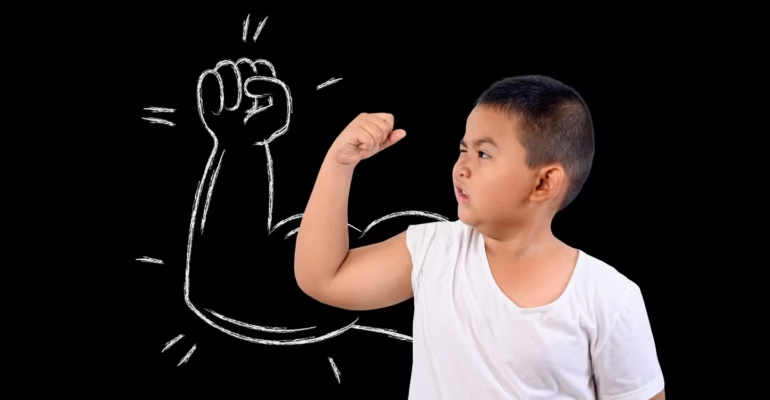
Every parent naturally wants their child to grow up happy and resilient. However, a child’s psychological well being is not only influenced by a supportive environment but also by the child’s simple belief that “I can do it.”
Research by Zahro Malihah, a doctoral student in the Family Studies Program at IPB University’s Faculty of Social and Human Ecology (FISEMA), shows that self efficacy has the strongest direct relationship with children’s psychological well being compared to other factors tested in the research model.
This finding is part of her dissertation titled A Model for Enhancing Self Efficacy and Psychological Well being in Early Childhood. The study involved 304 mothers with children aged 4–6 years from 19 kindergartens in the Bogor Barat subdistrict.
“The research results show that self efficacy has the strongest direct relationship with children’s psychological well being. This finding conveys an important message to me. When we talk about children’s psychological well being, it is not enough to simply look at whether their surroundings are supportive. We also need to examine whether the children’s experiences at home and school help foster their belief that they are capable,” said Zahro.
Self Efficacy: More Than Just Self Confidence
According to her, self efficacy is different from mere self confidence. Self efficacy is a person’s belief that they are capable of performing a certain action or tackling a specific task. In early childhood, this belief develops through everyday experiences, such as trying to dress themselves, completing a game, facing challenges, and experiencing success from their efforts.
“The goal isn’t to make children succeed every time. Children need to experience that not all efforts lead to immediate success. They can face difficulties, try again, and receive the right support. It is through such experiences that the belief ‘I can do it’ can grow,” she said.
This study also shows that fostering self efficacy is inseparable from the environment in which a child grows up. At home, parents can give children the opportunity to attempt age appropriate tasks without always stepping in when they face difficulties. The same principle can be applied in early childhood education (PAUD) through challenging play activities, providing assistance in stages, and valuing the learning process, not just the final outcome.
Zahro explained that one of the unique aspects of this study is its ability to integrate eight factors related to children, families, and the environment into a single model of early childhood psychological well being as the foundation for developing an improvement model.
The Chair of the Supervisory Committee, Prof Megawati Simanjuntak, noted that these findings open opportunities for further research.
“A child’s psychological well being is not shaped by a single factor. These findings on self efficacy are intriguing because they demonstrate that a child’s capacity develops alongside experiences shaped by their family and environment. Moving forward, these findings need to be further tested so they can be translated into practices that are truly beneficial for families and early childhood education centers,” she said.
Zahro emphasized that this research still needs to be tested across more diverse regions and family characteristics through follow up studies. Nevertheless, she hopes the results of her research will not remain merely an academic model.
“The core message is simple: children need to experience that they are capable. The role of adults is not to ensure children always succeed, but to provide a safe environment for them to try, face challenges, receive support, and continue to grow,” she concluded. (*/Rz) (IAAS/LAN)