IPB University Expert: Ice Packs on the Armpits Only Provide Temporary Relief from Anxiety, Not a Primary Treatment
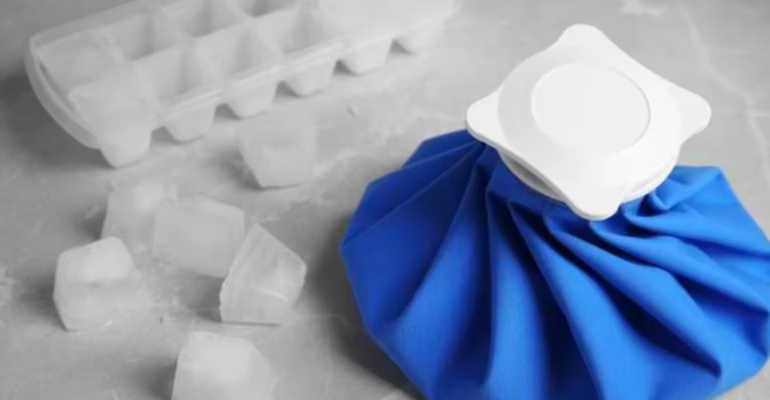
Recently, social media has been abuzz with discussions about using ice to cool the armpits as a way to relieve anxiety and overthinking.
Responding to this trend, psychiatrist and lecturer at the Faculty of Medicine and Nutrition (FKGiz) at IPB University, dr Riati Sri Hartini, SpKJ, MSc, explained that the sensation of cold can indeed have a calming effect, but it cannot be used as the primary therapy for treating anxiety disorders.
According to her, cold compresses can help reduce the body’s stress response by activating the parasympathetic nervous system, which plays a role in the relaxation process. Additionally, the sensation of cold can divert attention away from excessive thoughts through grounding techniques.
“The effect is only temporary, it helps calm the body, not address the root cause of anxiety. To date, there is insufficient scientific evidence that applying an ice pack to the armpit is a therapy for treating anxiety disorders or overthinking,” she explained.
dr Riati cautioned that people should be careful about relying on cold therapy as their primary solution. In her view, anxiety that persists to the point of disrupting sleep quality, work, or daily activities requires evaluation and treatment by a healthcare professional.
She also cautioned that applying ice directly for too long can cause irritation or even skin injury (cold burn). Therefore, cold compresses should only be used as a first-aid measure to help calm oneself, not as the primary treatment.
“The effectiveness of cold therapy in managing anxiety remains limited. In contrast, various techniques supported by scientific evidence, such as breathing exercises, mindfulness, relaxation, and grounding, have been proven to help reduce anxiety symptoms,” she said.
In fact, she continued, cognitive behavioral therapy (CBT) is one of the most effective psychotherapeutic approaches for treating anxiety disorders.
To maintain daily mental health, dr Riati advises the public to adopt a healthy lifestyle by exercising regularly, getting enough sleep, reducing caffeine intake, and limiting exposure to information that can trigger anxiety. These habits should be combined with breathing exercises, mindfulness, or relaxation techniques to optimize stress management.
“If anxiety persists for several weeks, interferes with daily activities, or is accompanied by panic attacks, consult a psychologist or psychiatrist immediately. Early and appropriate treatment will yield better results, whether through CBT or medication if necessary,” she concluded. (Lp)