Bogor Is No Longer as Cool as It Used to Be, IPB University Professor Explains Why Temperatures Are Rising
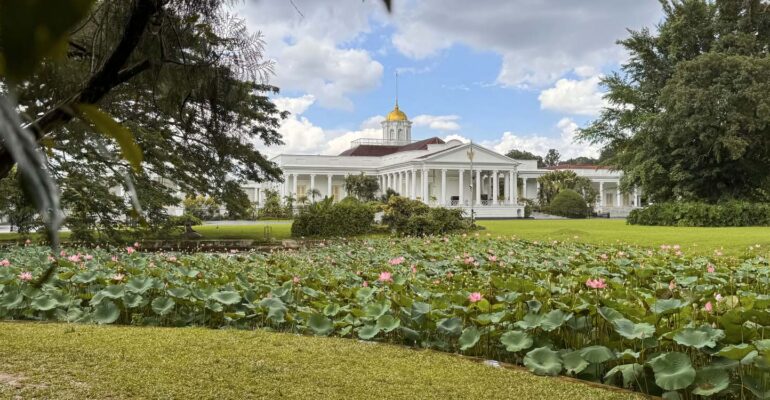
Bogor has long been known as the Rain City with relatively cool weather. However, in recent times, the people of Bogor have begun to notice a significant change.
Daytime temperatures feel hotter, even reaching 32–34 degrees Celsius, while rain falls less frequently than usual. These conditions raise the question: Is the hot weather in Bogor still considered normal, or is it a sign of increasingly evident climate change?
Dr Givo Alsepan, a professor in the Department of Geophysics and Meteorology at IPB University, explains that the rise in air temperature in Bogor is the result of a combination of various factors, ranging from global climate phenomena and global warming to changes in land cover due to rapid urbanization.
“Climatologically, the average air temperature in the Bogor region ranges from 25,5 to 27 degrees Celsius. However, during certain periods, these conditions can change due to the influence of global climate phenomena, particularly the El Niño-Southern Oscillation (ENSO),” he said.
ENSO is a phenomenon involving the interaction between the ocean and the atmosphere in the tropical Pacific Ocean, consisting of two phases: El Niño and La Niña. When El Niño occurs, Dr Givo explained, sea surface temperatures in the central and eastern Pacific become warmer, causing the center of cloud formation to shift toward the eastern Pacific. As a result, the supply of water vapor to Indonesia decreases, and rainfall tends to decline.
“El Niño is currently developing in the tropical Pacific Ocean and is predicted to last until the end of 2026. The shift of cloud cover from the Indonesian region toward the Pacific results in reduced cloud cover, allowing more solar radiation to reach the Earth’s surface. This condition is one of the reasons why residents of Bogor are experiencing hotter weather than usual,” he explained.
However, Dr Givo emphasized that El Niño is only a short-term trigger. Behind it lies a larger issue, namely global climate change, which is causing temperatures to rise year after year.
He revealed that climatological data shows the annual average temperature in the Bogor region has been on a consistent upward trend from around 1990 to the present. This pattern aligns with the rise in the Earth’s average temperature due to global warming.
“Climate change can be said to be one of the main causes of rising air temperatures in Bogor. Without serious mitigation efforts, this warming trend will continue,” he said.
Urban Heat Island
In addition to being influenced by global factors, changes in the landscape of Bogor have also exacerbated this condition. The reduction in green open spaces and the expansion of built up areas have caused surface temperatures to rise, triggering the urban heat island phenomenon.
Citing research by Nurwanda and Honjo (2018), Dr Givo explained that the expansion of urban areas in Bogor has occurred very rapidly, particularly during the period from 1997 to 2007. The temperature difference between urban and suburban areas has even increased from approximately 1,36 degrees Celsius in 1990 to nearly 2,26 degrees Celsius in 2017.
According to him, this situation indicates that urban development not balanced by the preservation of green spaces will further intensify the impacts of climate change at the local level. Therefore, maintaining vegetation cover must be an integral part of urban development strategies.
“The public can contribute through environmental greening and the adoption of buildings that are more heat adaptive. Meanwhile, the government needs to strengthen climate based spatial planning and expand green open spaces. Trees are an effective natural solution for lowering air temperatures, reducing the urban heat island effect, and improving the quality of the urban environment,” he concluded. (AS) (IAAS/EPK)