Often Considered As Waste, Prof Wini Trilaksani Transforms Fisheries Byproducts into Strategic Products
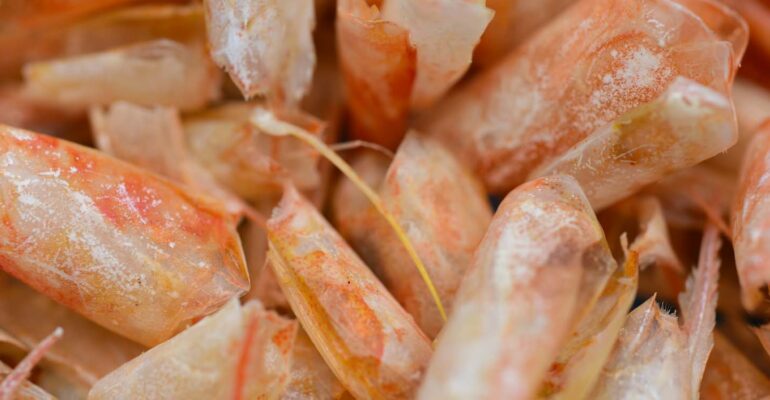
Fisheries byproducts, which have long been considered waste, actually hold great potential to support food security, the health industry, and Indonesia’s blue economy.
Prof Wini Trilaksani, a professor at the Faculty of Fisheries and Marine Sciences (FPIK) at IPB University, emphasizes that transforming blue food byproducts into value added marine biomolecules is a strategic step toward enhancing the competitiveness of the national fisheries sector.
Globally, approximately 35 percent of fish catches are wasted along the supply chain, while only about 54 percent of the fishery harvest is consumed directly by humans. The remainder is lost due to spoilage, inefficient processing, and low utilization of byproducts. This situation not only causes economic and environmental losses but also has the potential to become a serious nutritional problem.
“The ocean not only provides fish and other aquatic foods as consumer commodities but also harbors high value biomolecules that can serve as sources of nutrition, industrial raw materials, health products, and drivers of the blue economy,” said Prof Wini during her Pre-Inaugural Lecture as a Full Professor at IPB University on Saturday (6/27).
She explained that fishery byproducts such as heads, bones, skin, scales, fish eyes, swim bladders, shells, and even wastewater from processing are actually a form of secondary marine biomass that remains rich in nutrients and bioactive compounds.
These contain oils rich in eicosapentaenoic acid (EPA) and docosahexaenoic acid (DHA), as well as collagen, gelatin, chitin, chitosan, glucosamine, astaxanthin, and various other functional components that can be processed into functional foods, nutraceuticals, cosmetics, marine pharmaceuticals, biomaterials, and other value added products.
Tuna Eyes as a Source of Omega 3
One of the innovations developed by Prof Wini and her team is the utilization of tuna eyes as a source of omega-3. Research results show that large tuna eyes have high levels of fat (22,21%), oil yield (12,82%), DHA (37,45%), EPA (6,19%), and total polyunsaturated fatty acids (PUFA) (48,10%).
These findings prove that tuna eyes are not merely industrial waste, but a high value nutritional source with the potential to support public health and cognitive development.
According to Prof Wini, the future of Indonesia’s fisheries sector is determined not only by the volume of fish produced, but also by the ability to optimize the entire biomass that has been harvested.
In addition to reducing waste, the utilization of blue food byproducts also contributes to lowering the carbon footprint by improving the efficiency of marine resource use.
“The blue economy is not only built on the ocean’s production of commodities, but on science’s ability to transform every fraction of biomass into value,” she said. (dr) (IAAS/KQA)