
Turning Waste into Luxurious Fragrances, IPB University Student Team Transforms Used Cooking Oil into Aromatherapy Candles
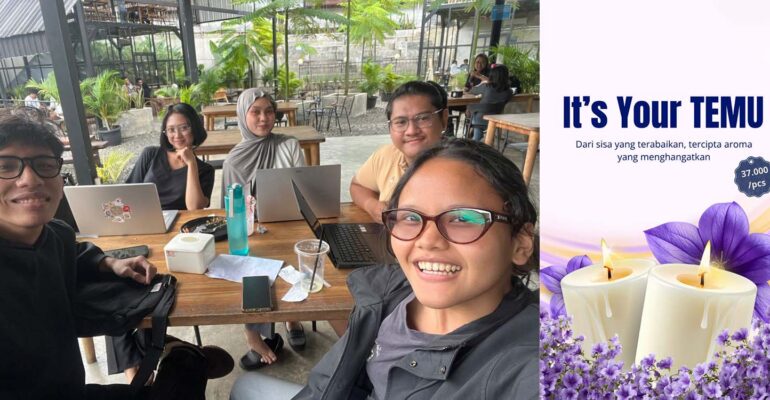
Used cooking oil, which often pollutes waterways, now has a new, more elegant purpose. Through the creative efforts of an IPB University student team participating in the 2026 Student Entrepreneurship Program (PMW), used cooking oil has been successfully transformed into a premium aromatherapy candle named TEMU.
Driven by concerns over the habit of disposing of used oil into campus drainage systems, the team led by Zahratun Nissa, a student in the Economics Program at the Faculty of Economics and Management (FEM) at IPB University initiated this brand as a circular economy solution.
According to her, TEMU is not just an ordinary candle. The product features a thematic concept, where each scent variant has a specific calming theme. The purification process is meticulously carried out using activated charcoal to absorb impurities and unpleasant odors. The team’s biggest challenge was overcoming the negative stigma surrounding waste-based materials to position the product as a high end lifestyle item.
“Our biggest challenge is overcoming the stigma that waste is synonymous with something dirty. We have to build a strong narrative and design so that this product is seen as something exclusive,” said Zahratun Nissa on behalf of her team.
Although targeting the eco-conscious segment, TEMU also appeals to young people and college students through its modern product design. The PMW 2026 program has also served as a key catalyst for the team in terms of seed funding and business mentoring to scale up production.
“We want to start small, such as reducing waste in the campus cafeteria, while encouraging young people to become more aware of the circular economy concept and a responsible lifestyle,” added Zahratun.
Moving forward, the TEMU team plans to strengthen its production foundation before eventually branching out into other waste-based product diversifications. This innovation proves that in the right students’ hands, neglected waste can “meet” high economic value while preserving the earth. (MW) (IAAS/LAN)

