Why Don’t Chickens Give Birth? IPB University Geneticist Reveals the Secret of Their Evolution
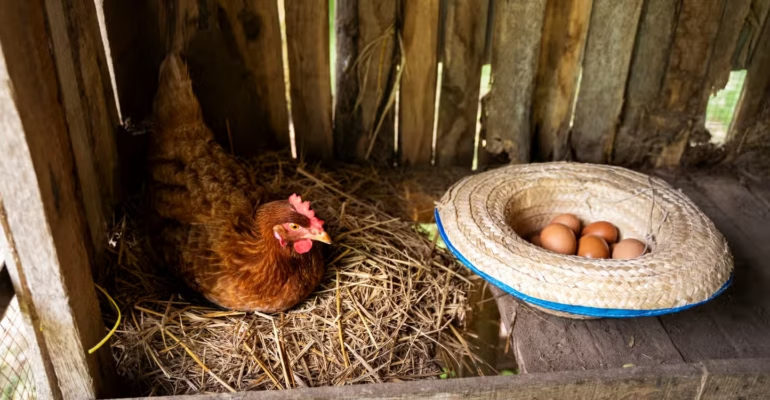
When observing a brooding hen, one might wonder why chickens lay eggs instead of giving birth to live young like cows or cats. An Ecological Genetics expert from IPB University explains why chickens and other birds have effectively “moved” their wombs outside their bodies.
“Although it may seem simple, the answer is related to the evolutionary history of chickens, survival strategies, and unique and remarkable adaptations,” he said.
Reptilian Heritage, Closer to T-Rex
Prof Ronny explained that the ancestors of birds took a different evolutionary path around 320 million years ago. At that time, reptiles developed the amniotic egg, an innovation featuring a hard shell, egg yolk and egg white, as well as an amniotic sac.
This innovation enabled embryos to survive and develop on land without requiring an aquatic environment. Birds, including chickens, inherited the results of this evolutionary process. The evolutionary lineage began with fish, which evolved into amphibians, reptiles, and birds.
“Genetically, chickens are more closely related to T-Rex than to cows. From an evolutionary perspective, chickens are winged reptiles that have retained their ancient reproductive system by laying eggs to survive and adapt. Therefore, eggs are older than chickens,” explained Prof Ronny, answering the classic scientific question, “Which came first, the chicken or the egg?”
Eggs as Portable Wombs
So, what makes eggs special? “For chickens, an egg is a portable womb because its shell and membranes function like a placenta in mammals. The egg white serves as a cushion and water reserve, the yolk provides nutrients, and the amnion functions like the amniotic fluid surrounding a developing embryo. This evolutionary adaptation is remarkable because all the functions of a mammalian womb have been transferred outside the bodies of chickens and other birds,” said the Professor at the Faculty of Animal Science, IPB University.
Furthermore, Prof Ronny explained that brooding evolved in chickens partly because their body temperature ranges from 41–42°C. “This temperature is too high for embryos to develop inside a chicken’s body. By laying eggs, mother hens can regulate the incubation temperature more flexibly,” he explained.
Staying Light for Flight
Another factor is body weight. Birds, including chickens, lay eggs to remain lightweight and agile when avoiding predators.
“If chickens gave birth to live young, the developing fetus would make their bodies heavier and interfere with their ability to fly, making it more difficult for them to escape predators in the wild,” Prof Ronny explained.
Chickens also have a different reproductive strategy from mammals. Chickens employ an “r-selection strategy,” producing many offspring in a short period because they are more vulnerable to predators and environmental conditions. In contrast, cows follow a “K-selection strategy,” producing fewer offspring while investing substantial resources in raising them.
From 12 Eggs to 300: Modern Chickens Can Now Lay 300 Eggs a Year
Prof Ronny stated that humans have played a major role in changing the number of eggs chickens produce through selective breeding.
“Junglefowl, the ancestors of modern chickens, lay around 12 eggs per year because this number is optimal for their offspring’s survival. Selective breeding programs have enabled modern chickens to lay 300 eggs per year. Although their numbers differ drastically, both types of chickens continue to lay eggs because this is the most efficient way to survive in unpredictable environments and avoid predators,” he explained.
According to Prof Ronny, this demonstrates that evolution does not always lead to more advanced forms but rather to forms that are better suited to their environments.
“Egg laying in chickens is the evolutionary outcome that best suits their needs because it allows them to remain lightweight while producing many eggs, increasing their chances of surviving predator attacks. This is not a limitation. Evolution is focused on producing individuals capable of surviving and adapting to their environments, rather than competing to achieve perfection,” he concluded. (IAAS/HRD)