IPB University’s TEP Initiative Aims to Make Kumbe, Meraukema New Center for Fisheries and Economic Development in the Salor Transmigration Area
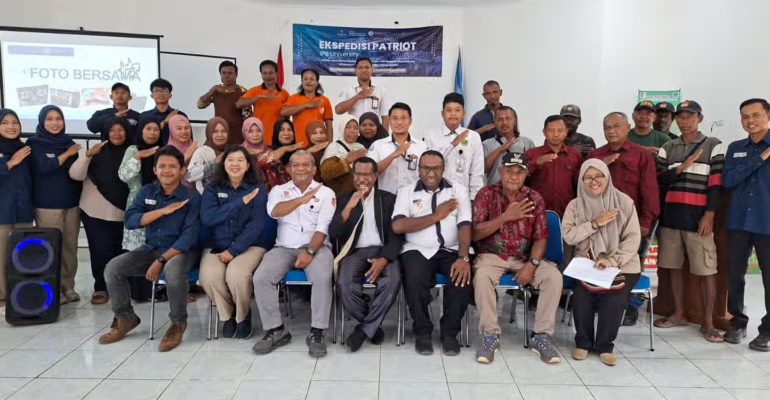
The Salor Transmigration Area, Malind District, Merauke Regency, South Papua, is being promoted as a new economic zone based on local potential, particularly in the fisheries sector.
This was highlighted during a Focus Group Discussion (FGD) held by Team 14 of the Patriot Expedition in Kumbe on Friday (9/25). The event was attended by the Chairman of the Merauke Regency Fisheries Service, Leonard H F Rumbekwan, SPi, SST , and the Chairman of Malind District, Agustinus Hendra Way, SIP, MPWK.
Leonard stated that the development of the transmigration area must be based on three aspects: the economy, infrastructure, and human resources. The fisheries sector is seen as having significant potential across the entire value chain from capture fisheries and aquaculture to processing and marketing.
“It’s not enough to just catch fish. There must be processing, diversification, marketing, and ways to maintain quality through the cold chain,” said Leonard.
Kumbe is considered to have the initial potential to be developed as a center for fisheries production and processing. A number of groups that process and market fishery products (Poklahsar) have already developed products such as salted fish and fish nuggets.
The FGD also discussed strengthening the value chain, market access, culinary hubs, and opportunities for collaboration with various institutions and companies in Merauke. Thus, the community’s fishery output does not stop at production but can reach a broader market.
The Chairman of TEP IPB University, Dr Roza Yusfiandayani, said the event was part of efforts to design the optimization of capture fisheries from upstream to downstream based on the blue economy.
The team comprising Yomivin Varel Hendayana, Furqon Sidiq, Setiadi M. Noor, Lailancika Ansyar, and Oktaviani urged that the FGD’s outcomes be translated into concrete programs for the community.
The series of activities then continued with training on the diversification of processed fish products, as a step toward increasing the added value of local fisheries.
From Kumbe, the message was clear: fish are not just to be caught, but also processed, marketed, and developed as a driver of the community’s economy. (IAAS EPK)