IPB University’s OVOC Program Goes to Japan: Building Bridges from Indonesian Villages to the World Stage
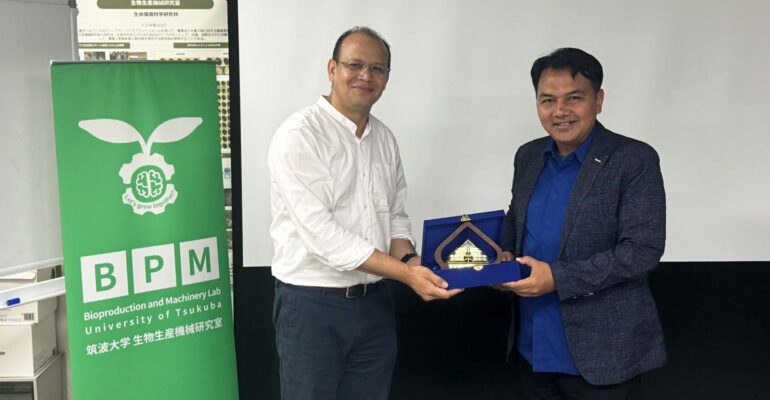
IPB University’s One Village One CEO (OVOC) program has once again taken a strategic step on the international stage through a series of activities in Japan from June 24 to July 2, 2026. This mission serves as a crucial opportunity to introduce an entrepreneurship-based village empowerment model to the global academic community while opening up international market access for Indonesia’s premier village products.
The activities in Japan were attended by a team from IPB University’s Institute for Agromaritime Development and Innopreneurship Acceleration (LPA2I), consisting of Dr Supriyanto, Ananda Putra Septiadi, Fachri Rizqullah, Fahreza Ramadhan Zianidan, Irfan Nur Alawi, and Rafly Tirta Putra.
“This event is part of efforts to internationalize OVOC and strengthen global networks for villages in Indonesia. Through OVOC, IPB University has demonstrated that innovations originating from Indonesian villages are accepted within the international academic community and possess strong global market potential, both now and in the future,” said Dr Supriyanto, leader of the delegation.
The trip began with a visit to the University of Tsukuba and a discussion with Prof Tofael Ahamed, an expert in precision agriculture. The delegation presented the concept and implementation of OVOC, which IPB has been carrying out over the past few years. The event also featured a demonstration and coffee cupping of coffee produced under the guidance of IPB’s OVOC program. The team also reviewed various precision agriculture innovations at the University of Tsukuba’s laboratory.
Next, they held a meeting with Prof Ryozo Noguchi, Assistant Prof Ayana Ito, and students from the Agricultural System Engineering program at the Graduate School of Agriculture, Kyoto University. The meeting opened opportunities for collaboration in the areas of sustainable coffee product development, rural innovation, agricultural technology, and human resource development between Indonesia and Japan.
“This collaboration is expected to serve as a gateway to strengthening human resource capacity and developing technologies that can be applied to support the OVOC program in Indonesia,” added Dr Supriyanto.
In addition to expanding their academic network, the OVOC delegation also pursued market expansion efforts by visiting the Japan International Food Expo (JFEX) at Tokyo Big Sight, one of Japan’s largest food and beverage exhibitions. This event served as a strategic platform to study global market trends, expand business networks, and explore marketing opportunities for Indonesia’s premier village products in the international market.
The series of events concluded with a visit to Dapoer Koneng in Yokohama, in the Tokyo metropolitan area, a successful Indonesian restaurant that serves as a showcase for Indonesian products and flavors in Japan. Dapoer Koneng’s success demonstrates that Indonesian products and culture have significant potential to be accepted by international markets and serves as an inspiration for OVOC in establishing global marketing channels for premium village products.
This visit also rounded out OVOC’s mission in Japan, which ranged from introducing the village empowerment model to world-class academic circles, building international collaboration networks, and studying strategies for expanding Indonesian village products into global markets. (*/Rz) (IAAS/WSG).