With a Potential of 200 Million Lobster Larvae per Year, IPB University Experts Urge Downstream Development of the National Lobster Industry
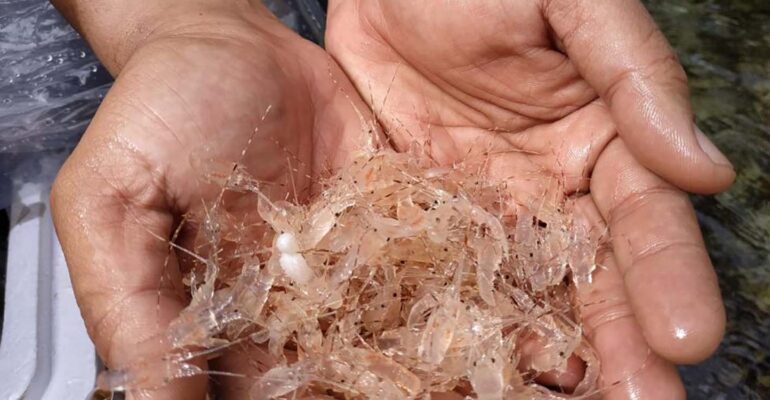
Indonesia has a significant opportunity to increase the economic value of the fisheries sector through the management of lobster larvae (BBL) that is more focused on downstream development and strengthening the national industry.
This potential is significant given that Indonesia is one of the world’s leading suppliers of BBL, while the greatest value added is actually reaped by the export destination countries.
According to Dr Thomas Nugroho, a lecturer at the Faculty of Fisheries and Marine Sciences (FPIK) at IPB University, lobster remains a crustacean commodity with a lower economic contribution compared to shrimp and mud crabs.
In 2024, Indonesia’s lobster trade value was recorded at around 90 million US dollars, still far behind competing countries like Vietnam.
He noted that the economic disparity is clearly evident in the lobster trade chain. At the fisherman level, lobster prices range from Rp10.000 to Rp15.000 per piece. However, in the Vietnamese market, the value can reach Rp40.000 to Rp70.000 per lobster, and according to certain research findings, even up to Rp150.000 per lobster.
This situation, he noted, indicates that the majority of economic profits are generated during the distribution and lobster farming stages, not by upstream industry players.
“BBL is not merely a fishery resource, but possesses high economic value capable of generating various economic activities ranging from capture, collection, logistics, transportation, to international trade,” said Dr Thomas.
He revealed that Indonesia’s lobster seed potential is estimated to exceed 200 million individuals. If converted using an average value of Rp40.000 per lobster, the circulating economic value could reach approximately Rp9 trillion.
The magnitude of this value makes BBL a strategic commodity involving trade networks, financial flows, as well as various regulatory and licensing instruments.
Dr Thomas added that good governance is a key factor in ensuring that the economic benefits of BBL are felt by the community and the state.
He noted that transparency in licensing, strengthened oversight, integrated logistics systems, and institutional coordination must be reinforced to prevent economic leakage and rent-seeking practices within the lobster trade.
“The transition from exporting larvae to achieving lobster industry sovereignty is a crucial step to ensure that value addition, state revenue, and fishermen’s welfare can increase sustainably,” he emphasized.
Through the strengthening of research, innovation, and the domestic lobster farming industry, Indonesia has the opportunity to become a center for high-value lobster production while simultaneously strengthening the blue economy, which prioritizes the welfare of coastal communities and state revenue. (dr) (IAAS/WSG)