Is Nata de Coco Made with Urea? IPB University Expert Explains the Facts Behind Its Production Process
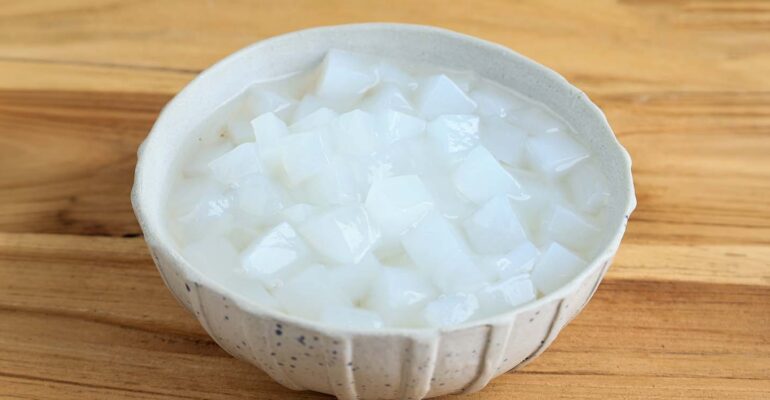
Nata de coco is one of the most popular fermented coconut water products, commonly used as an ingredient in beverages and desserts. Its chewy texture, sweet taste, and translucent white appearance make it a favorite among people of all ages.
Despite its popularity, concerns have arisen regarding the use of urea and ammonium sulfate (ZA) in its production process.
Prof Khaswar Syamsu, Professor at the Faculty of Engineering and Technology, IPB University, emphasized that commercially available nata de coco is safe for consumption as long as it is produced following proper fermentation procedures.
Prof Khaswar explained that the use of urea and ammonium sulfate in the production process is not intended as a food ingredient for human consumption, but rather as a nutrient source for bacteria during fermentation.
“Nata de coco is pure microbial cellulose produced through the activity of the bacterium Acetobacter xylinum. During this process, the microorganism requires carbon and nitrogen sources to grow and simultaneously produce nata de coco,” said Prof Khaswar.
Therefore, both urea and ammonium sulfate serve as nitrogen sources for the bacteria during fermentation, rather than substances that are directly consumed by humans.
Furthermore, Prof Khaswar emphasized that once fermentation is complete, the remaining culture medium and substrates are removed through washing, boiling, and soaking processes.
As a result, the final product marketed to consumers is pure microbial cellulose that does not retain the fermentation medium used during production. (dr) (IAAS/PRP)