
IPB University Lecturer: Muara Angke’s “Trash Island” Threatens Mangrove Ecosystems and Aquatic Food Chains
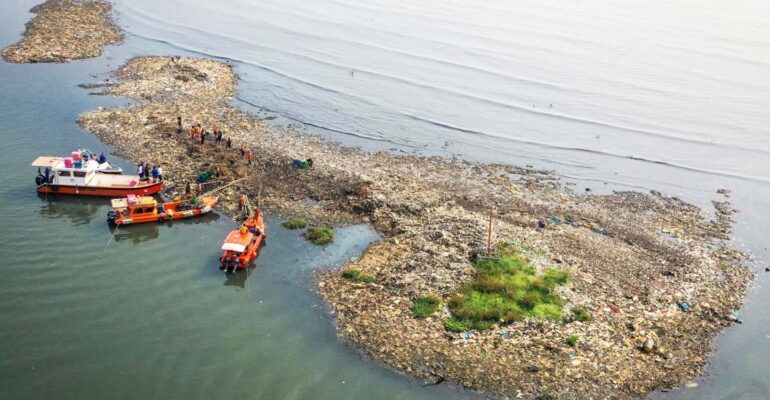
The phenomenon of the “trash island” in Muara Angke, which has recently drawn public attention, serves as a reminder that waste problems do not end at disposal sites but have far-reaching impacts on aquatic environments.
An expert in Pollution and Toxicology from the Department of Aquatic Resources Management, Faculty of Fisheries and Marine Sciences (FPIK) at IPB University, Prof Etty Riani, highlighted the serious impacts of the “trash island” in Muara Angke. She explained that the waste composition in the area is dominated by plastics, including both macroplastics and microplastics.
“We found a very large amount of plastic waste trapped within mangrove sediments. Common types include plastic bags, plastic bottles, food and beverage packaging, styrofoam, discarded fishing nets, and household waste,” she said.
According to Prof Etty, the presence of plastic waste directly disrupts the ecological functions of mangroves. Impermeable plastic materials can cover mangrove pneumatophores, or aerial roots, thereby hindering oxygen exchange. In addition, plastic covering the sediment may alter its physical, chemical, and biological characteristics and inhibit the regeneration of mangrove seedlings.
The accumulation of waste also affects water quality. Plastic waste can reduce dissolved oxygen (DO) levels, increase the potential formation of toxic gases such as ammonia, H₂S, and nitrite, and raise the concentration of microplastics, nanoplastics, and hazardous and toxic substances in aquatic environments.
“This trash island also has direct and indirect impacts on fish and birds that intentionally consume plastic or microplastics because they mistake them for food,” she explained.
She added that microplastics and nanoplastics pose significant risks of entering the food chain. Filter-feeding organisms such as mussels and oysters are particularly vulnerable to accumulating these particles in substantial quantities. Microplastics can also act as carriers of heavy metals, radioactive elements, and persistent organic compounds that are harmful to ecosystems.
Prof Etty explained that the waste problem in Muara Angke cannot be separated from the condition of the watersheds that flow into Jakarta Bay. The waste accumulating in the area originates not only from Jakarta but also from various upstream regions.
Therefore, she emphasized that solutions must be implemented through an integrated upstream to downstream approach. Public education should be carried out consistently, accompanied by stronger waste management systems, cross regional monitoring, reductions in single-use plastics, the development of waste banks, 3R, Material Recovery Facilities (MRFs), recycling initiatives, RDF, and environmentally compliant Waste to Energy technologies.
“The most important solution is to stop the flow of waste from rivers into the sea. If the source is not addressed, cleanup efforts in Muara Angke will only provide temporary results,” she stressed.
She further emphasized that restoring mangrove ecosystems requires a long period of time, potentially more than 10 years to fully recover their ecological functions. Therefore, integrated management of both community behavior and the waste generated remains the key to achieving a sustainable solution to the problem. (*/Rz) (IAAS/ADF)

