IPB University Develops a Roadmap for GEDSI Implementation Through the PRIME STeP Gender Analysis 2026 Program
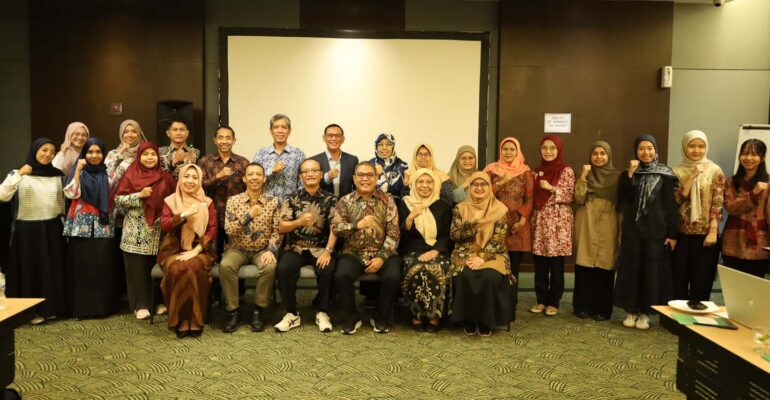
IPB University, through the Institute for Agromaritime Development and Innopreneurship Acceleration (LPA2I) in collaboration with the Center for Gender and Children Studies (PKGA), held a discussion regarding the implementation of Gender Equality, Disability, and Social Inclusion (GEDSI) through the Promoting Research and Innovation through Modern and Efficient Science and Technology Parks Project (PRIME STeP) Gender Analysis 2026.
This event was held through a Focus Group Discussion (FGD) at the IPB International Convention Center recently. The FGD is a strategic step in drafting the roadmap for GEDSI implementation at IPB University for the 2026–2030 period.
Vice Chair of LPA21’s Agromaritime Development and Science Technopark division, Prof Tri Prartono, noted that IPB University already has a Rector’s Regulation regarding GEDSI implementation and is now moving into the roadmap development phase to ensure its implementation is effectively expanded across all operational units.
In line with this, the Chairman of the International Research Institute for Social, Economic, and Regional Development, Prof Arya Hadi Dharmawan, also stated, “The implementation of GEDSI is not only related to gender equality but also addresses aspects of mental health, accessibility, campus facilities that support the needs of vulnerable groups, and the creation of a safe academic environment.”
In her presentation on the roadmap’s goals and strategies, the Chairperson of PKGA, Dr Yulina Eva Riany, reflected on the findings from previous programs.
“Looking at the results of the mapping and evaluation of the implementation of Gender Mainstreaming (PUG) based on GEDSI at IPB in 2025, we still face various real challenges. These challenges encompass policy and systems, facilities and infrastructure, social culture, and protection for the entire academic community,” explained Dr Yulina.
This FGD produced the implementation roadmap for IPB’s GEDSI 2026–2030, beginning with strengthening institutional foundations in 2026, system integration in 2027, cross-unit expansion in 2028, quality and accountability enhancement in 2029, and the full institutionalization of GEDSI by 2030.
Additionally, various strategic proposals were presented, such as providing comfortable and adequate breastfeeding rooms, facilities accessible to the elderly and people with disabilities, counseling rooms, enhancing campus security, integrating the GEDSI perspective into the curriculum, and training in women’s leadership.
Through collaboration between LPA2I and PKGA in the PRIME STeP Gender Analysis 2026 Program, IPB University is expected to become a pioneer campus that implements GEDSI principles sustainably and with tangible impacts for all parties within the academic community. Institutional strengthening, leadership support, and cross unit engagement serve as the primary foundations for creating a safe and equitable campus environment. (*/Rz) (IAAS/KQA)