Highlighting the Surge of Qurban Waste, IPB University Expert Offers Practical SolutionsHighlighting the Surge of Qurban Waste, IPB University Expert Offers Practical Solutions
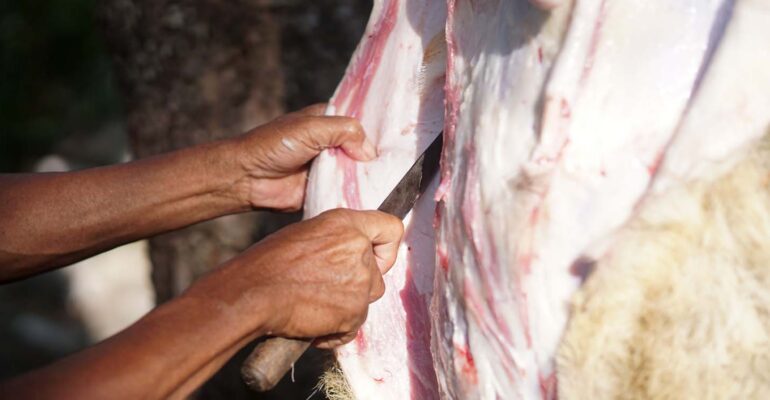
Every Eid al-Adha, the increase in livestock numbers not only brings blessings but also raises a recurring issue: the surge of waste that is often not managed optimally. If not handled properly, this waste has the potential to pollute the environment and pose health risks.
An expert from IPB University, Dr Salundik, emphasized that livestock waste during the qurban period must be managed properly due to its enormous quantity and widespread distribution across various locations.
He explained that qurban waste can be divided into two main categories based on location, namely waste from livestock selling areas and waste from slaughtering areas.
“Waste at selling locations generally consists of manure (feces) and leftover forage feed. Since livestock are gathered in large numbers around 20 days before Eid al-Adha, the accumulation becomes extremely massive,” he explained.
As an illustration, 50 cattle, each producing approximately 20 kilograms of manure per day, can generate up to 20 tons of waste during that period.
Meanwhile, waste from slaughtering sites has different characteristics and carries higher risks. This type of waste includes blood, rumen contents, and digestive tract waste that may cause contamination, especially in urban areas with limited land availability.
“The types of waste in slaughtering areas require special handling because the contamination risk is much higher,” he stated.
As a solution, Dr Salundik encouraged the utilization of organic waste from selling areas, such as manure and leftover feed, to be processed into value added products.
“Feces and leftover feed can be processed into organic fertilizers such as compost or vermicompost. This becomes a practical solution while also providing economic value,” he explained.
However, he acknowledged that waste management at slaughtering sites remains a challenge. This is due to the uncertain number of livestock, scattered slaughtering locations, and limited land availability for waste processing.
These conditions indicate that qurban waste management cannot be carried out partially, but instead requires a more planned and coordinated approach, especially in urban areas.
Through the conversion of waste into organic fertilizer, communities can not only reduce environmental impacts but also contribute to more sustainable circular economy practices.
With proper management, qurban waste will no longer become an environmental burden, but can instead be transformed into a useful resource for society. (dr)(IAAS/KLC)