
IPB University’s PKSPL Appointed Coordinator for the Development of a Regional Cross-Border Blue Carbon Methodology
Coastal and marine areas in East Asia face increasingly complex pressures due to climate change, ecosystem degradation, and rising human activities. In this context, blue carbon ecosystems represent a strategic approach that not only contributes to climate change mitigation but also strengthens the resilience of coastal ecosystems and supports a sustainable blue economy.
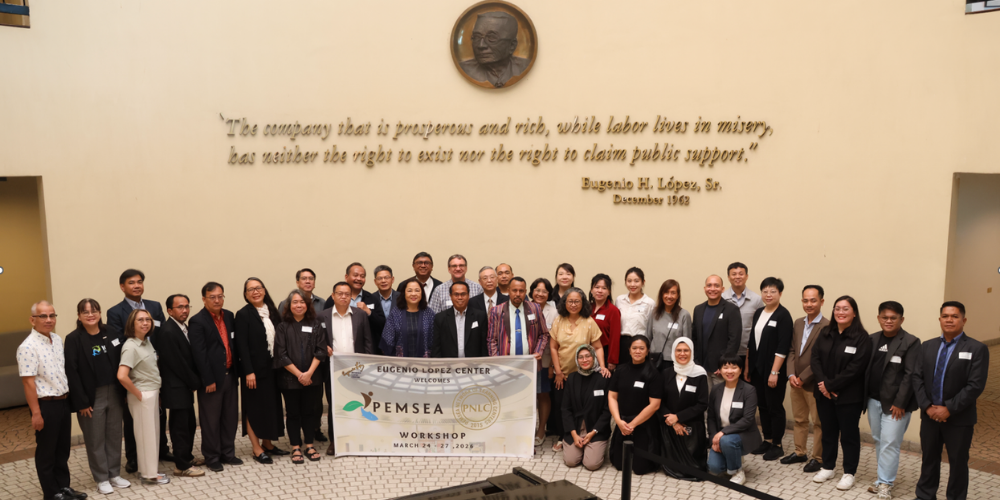
To address these challenges, the Center for Coastal and Marine Resources Studies (PKSPL) at IPB University coordinated 25 Learning Centers in the PNLC Regional Workshop: From Knowledge to Action: Scaling Blue Carbon Initiatives in the East Asian Region, as well as the 5th PNLC General Assembly, held in Antipolo and Manila, Philippines (3/24–27).
The workshop was attended by more than 45 participants from 10 countries in the East Asian Seas region, including Indonesia, Philippines, Vietnam, Thailand, Cambodia, Laos, China, Hong Kong, and Timor Leste.
The event focused on bridging the gap between scientific knowledge and policy implementation, while also disseminating the regional blue carbon methodology developed by the TWG Blue Carbon PRF PEMSEA and PNLC.
The event was led by the PNLC Secretariat, based at the PKSPL IPB University, and hosted by the University of the Philippines–Marine Science Institute (UP-MSI), in collaboration with the PEMSEA Resource Facility (PRF).
Prof Yonvitner, as Chairman of the PKSPL at IPB University and President of the PNLC, emphasized the strategic role of the PKSPL as a key driver in the development of blue carbon knowledge, as well as the regional coordinator of the PNLC.
“The active participation of the PKSPL at IPB University reaffirms Indonesia’s position as a leader in the development of science, policy, and the implementation of coastal management in the region,” he stated.
He added, “Moving forward, the synergy of the PNLC is expected to yield concrete programs with broad impact and strengthen contributions to the global agenda on climate change and ocean based sustainable development.”
The discussion highlighted the importance of standardizing methodologies that are not only scientifically grounded but also integrated with policies, financing, and sustainable data systems. Additionally, regional collaboration and the involvement of the younger generation are key to driving the transformation of knowledge into tangible action.
Dr Akhmad Solihin, a researcher at IPB University’s PKSPL, emphasized during the forum the importance of integrating ecosystem service valuation into public policy and financing mechanisms such as carbon trading, as well as its contribution to NDC targets. Meanwhile, Isdahartati, a facilitator from the PNLC Secretariat, presented achievements and work plans focused on capacity building, network strengthening, and knowledge exchange.
At the culmination of the event, the 5th PNLC General Assembly was attended by 21 of the 25 PNLC members. The meeting discussed program achievements, the implementation of the SDS-SEA 2023–2030, and future strategic directions. The outcomes included short-term plans for training and the formation of a technical working group, as well as long-term plans for collaborative research, methodological harmonization, and the implementation of blue carbon pilot projects. (IAAS/DAM)

