IPB University Professor Suggests Processing Pleco Fish into Fertilizer for Ornamental Plants
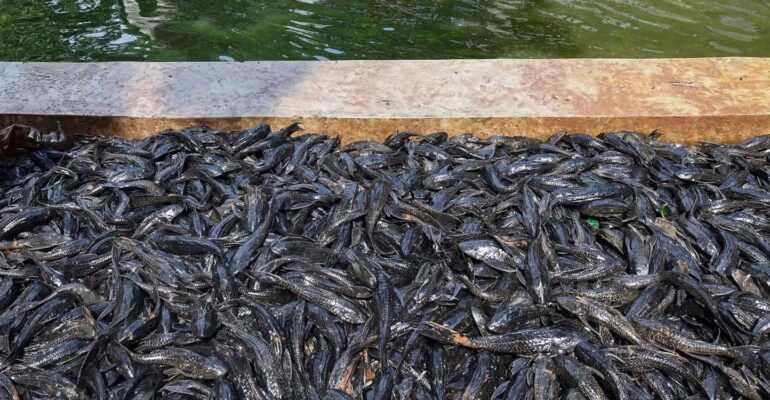
The culling of pleco fish in the waters of Jakarta is considered an important step in maintaining ecosystem balance. However, behind these efforts lies an opportunity for utilization that has yet to be fully optimized.
Professor of Fisheries Product Technology at IPB University, Prof Mala Nurilmala, emphasized that the results of the eradication should not simply end up as waste.
She urged that pleco fish be processed into useful products, one of which is liquid fertilizer for ornamental plants. According to her, this approach is not only environmentally friendly but also capable of generating added value from the results of invasive species control.
“It’s best to use pleco fish for liquid fertilizer for ornamental plants. They can’t be used for living organisms anymore because they’re in waters heavily contaminated with heavy metals,” she said.
Prof Mala explained that pleco fish living in Jakarta’s rivers are at high risk of heavy metal exposure. This condition makes them unsafe for human consumption or use as livestock feed, as they have the potential to cause the accumulation of harmful substances in the food chain.
“Fish from polluted waters are not only risky for humans but also if used as livestock feed. The heavy metals can accumulate,” she explained.
She added that this does not apply to pleco fish living in clean waters. In unpolluted environments, these fish can essentially still be utilized like any other fish.
Furthermore, Prof Mala highlighted the pleco fish’s adaptive nature, which makes its population difficult to control. Without ecosystem balance and natural predators, this species can proliferate rapidly, dominate habitats, and threaten local fish populations.
“Actually, these fish can help absorb metals in the water. However, because the ecosystem is unbalanced, their population has become massive and is having a negative impact,” she said.
In this context, utilizing pleco fish as fertilizer for ornamental plants is considered a wiser solution than simply burying them. In addition to providing benefits, this approach can also reduce the potential accumulation of organic waste that is difficult to decompose, given the relatively hard body structure of pleco fish.
With this innovative approach, the eradication of sapu-sapu fish is not merely an effort at population control but can also become part of a sustainable solution that transforms environmental challenges into valuable opportunities for the community. (AS) (IAAS/KQA)