Safe and Comfortable Homecoming Travel, Governance and Risk Management Office of IPB University Shares Important Tips
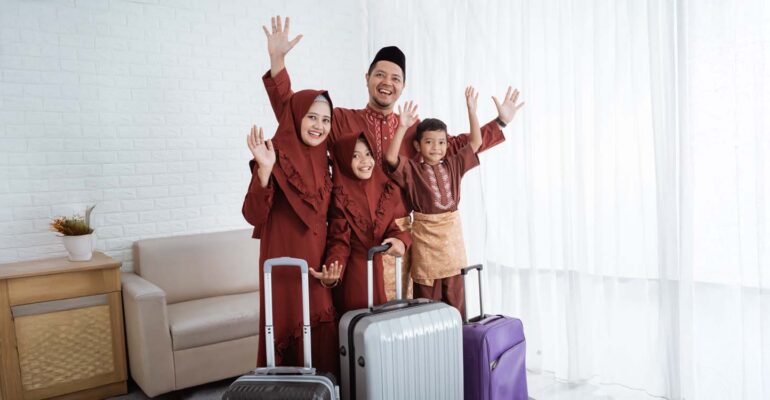
Eid homecoming has become a deeply rooted tradition in Indonesian society ahead of the holiday. However, potential crimes such as theft still need to be anticipated. Therefore, ensuring home security before leaving is an important step so that the journey can be calm and comfortable.
The Chairman of Governance and Risk Management Office at IPB University, Ir Budi Purwanto, ME, emphasized that basic security measures must be a priority before departing for one’s hometown. He reminded homeowners to ensure that all access points are securely locked.
“Make sure doors, windows, and ventilation are tightly secured. Add padlocks to gates or garages. Store important documents, jewelry, and electronic devices in a safe or hidden place,” he said.
In addition to physical security, Budi also suggested that homeowners coordinate with trusted neighbors or local community leaders (RT) to help monitor the house while it is left unattended. “Exchange contact numbers and maintain good communication,” he added.
The use of automatic lighting is also considered effective in creating the impression that the house remains occupied. Indoor and outdoor lights can be set to turn on automatically at night.
From an electrical standpoint, Budi advised turning off the secondary miniature circuit breaker (MCB) before leaving. Cables for non-essential electronic devices such as televisions and chargers should be unplugged to prevent the risk of short circuits, while refrigerators and freezers may remain on if necessary.
For other household equipment, gas stove regulators should be detached and gas cylinders tightly closed. Water dispensers should also be turned off to avoid potential leaks.
“As a mitigation measure against fire and flood risks, it is advisable to remove flammable materials such as trash or cardboard, trim tree branches around the house, and ensure that drainage channels are not blocked,” he explained.
He also recommended installing smoke detectors, ensuring fire alarms are functional, and placing fire extinguishers in easily accessible locations. “Regular monitoring of the house through CCTV connected to mobile applications is also a recommended preventive measure,” Budi noted.
To enhance security further, Budi encouraged the implementation of dual security measures, such as installing double locks on the main door using a combination of conventional and password based digital locks.
“Adjustments to environmental conditions are also important. Ensure that water channels around the house flow smoothly and are not clogged. For houses in flood-prone areas, lower ventilation openings and gaps can be sealed using waterproof boards,” he said.
To prevent humidity and mold growth, he suggested placing silica gel or moisture-absorbing agents inside cabinets and enclosed spaces, as well as covering wooden furniture with tarpaulin.
External security is equally important. Decorative plants or pots on terraces should be securely fastened to prevent them from being blown away by strong winds. Gardening tools such as shovels and ladders should be stored indoors to avoid misuse by unauthorized individuals.
As an emergency precaution, Budi recommended storing copies of identity cards, land certificates, and insurance policies in cloud storage such as Google Drive or Dropbox to ensure easy access when needed.
“Wishing you a blessed Ramadan and a smooth homecoming journey. Leave your home with peace of mind and return safely,” he concluded. (Lp) (IAAS/KAL)