
Prospective Food Handlers from SPPG Kitchens Attend Intensive Training at IPB University
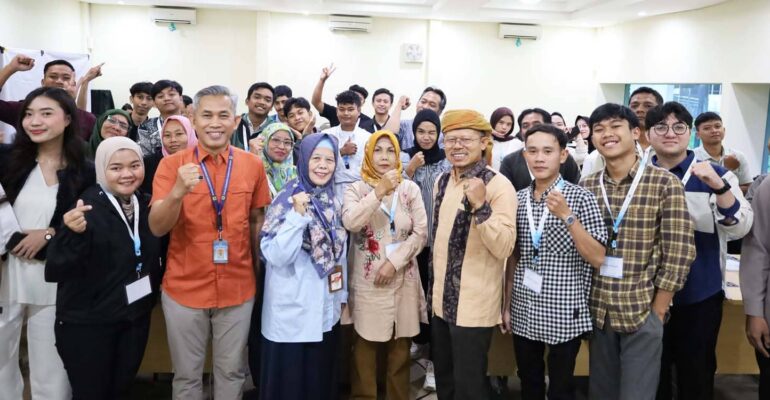
A total of 36 prospective food handlers from the Bogor Ciampea Tegalwaru 3 Nutrition Fulfillment Service Unit (SPPG) kitchens attended intensive Ready to Serve Food Safety Training.
This activity is a strategic collaboration between the Bogor District Health Office, PT Bogor Life Science Technology (BLST), and IPB Training to strengthen ready to serve food safety standards in the implementation of the Free Nutritious Meals (MBG) program.
During the two-day training (2/23-24), participants received comprehensive training ranging from ready to serve food safety policies, nutritional standards for program menus, potential food contamination and foodborne diseases, workplace maintenance, vector control, to standard sanitation operating procedures (SSOP) and equipment cleaning.
The material was presented by Prof Ahmad Sulaeman, Professor of Community Nutrition at IPB University. He delivered material related to the urgency of food safety in mass catering in MBG kitchens, as well as an introduction to the implementation of the Hazard Analysis Critical Control Point (HACCP) system.
“Mass food service kitchens have a big responsibility in ensuring food safety from upstream to downstream. Identifying critical control points is a preventive measure to avoid contamination risks and extraordinary incidents caused by food,” he said.
The Chairperson of the Family Health and Nutrition Team of the Bogor Regency Health Office, Wayan Sri Agustini, SST, MKes, expressed her appreciation for the synergy that has been built between institutions. “Hopefully, this activity can be part of a joint effort in supporting the Indonesia Emas 2045 vision through the provision of safe and nutritious food,” she said.
Also present was Tetty, a representative of the Inspirasi Pangan Bangsa Foundation. “I am here to learn firsthand about the material presented by the speakers. This is important so that we have a comprehensive understanding of good SPPG kitchen management and can apply it optimally,” she said.
Through this activity, it is hoped that all prospective food handlers will be able to consistently apply the principles of hygiene, sanitation, and food safety control systems, so that SPPG kitchen operations run in accordance with health standards and support improvements in community nutrition quality. (*/Rz) (IAAS/WSG).

