IPB University Expert Recommends Using Mass Transportation to Reduce Air Pollution During Eid Homecoming
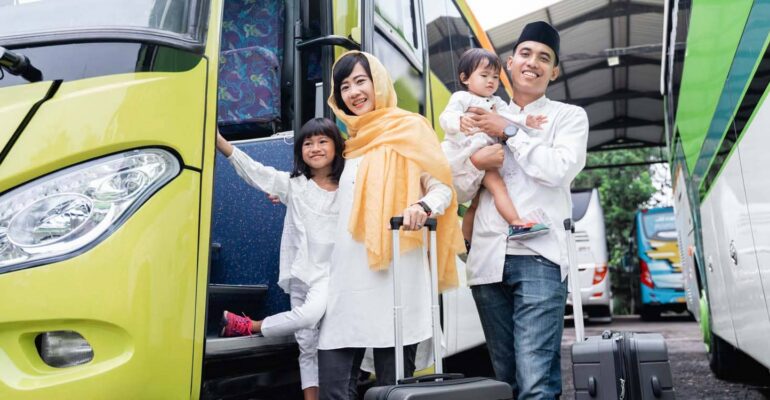
The increasing flow of Eid homecoming (mudik) every year has the potential to cause environmental impacts, one of which is increased air pollution. The surge in public mobility during this period causes the use of motor vehicles to increase significantly.
An Environmental Management and Pollution expert at IPB University, Prof Hefni Effendi, suggests that the public consider using mass transportation to reduce negative environmental impacts, especially air pollution.
According to him, the increasing use of private vehicles during the homecoming period can raise greenhouse gas emissions due to the burning of fossil fuels. “With the increase in the use of private cars and motorcycles, as well as the addition of the frequency of trains, buses, and flights, greenhouse gas emissions and the transportation carbon footprint will also increase,” he said.
He believes that the use of mass public transportation is a more environmentally friendly option because it can reduce the number of private vehicles on the road. Thus, the potential for air pollution and noise pollution can be suppressed.
On the other hand, Prof Hefni also emphasized the importance of the government’s role in improving the quality of mass transportation services so that they become more attractive to the public. According to him, public transportation facilities need to continue to be improved, starting from punctuality, comfort, safety, to the expansion of travel destinations.
“The provision of these facilities can be encouraged by providing incentives to mass transportation providers, both state owned enterprises and private companies,” he said.
He also appreciated the government’s step of reopening the policy of work from home (WFH) and work from anywhere (WFA) for employees ahead of Eid. The policy is considered capable of helping reduce the buildup of travel flows while also potentially suppressing greenhouse gas emissions.
However, for people who still choose to use private vehicles, Professor Hefni suggests taking advantage of the long holiday period so that travel is not carried out simultaneously. This step is considered able to help reduce traffic congestion as well as suppress the accumulation of air pollution, noise, and waste during the homecoming period.
Besides air pollution, homecoming travel activities also have the potential to increase the volume of solid waste, especially from the use of single use packaging during the journey. Therefore, Professor Hefni reminds the public of the importance of reducing the use of single use packaging (throw away packing) and starting to switch to reusable packaging. (dh) (IAAS/AS)