
Why Do Toddlers Fall Asleep Quickly While Traveling? Lecturer of the Faculty of Medicine and Nutrition, IPB University, Provides the Scientific Explanation
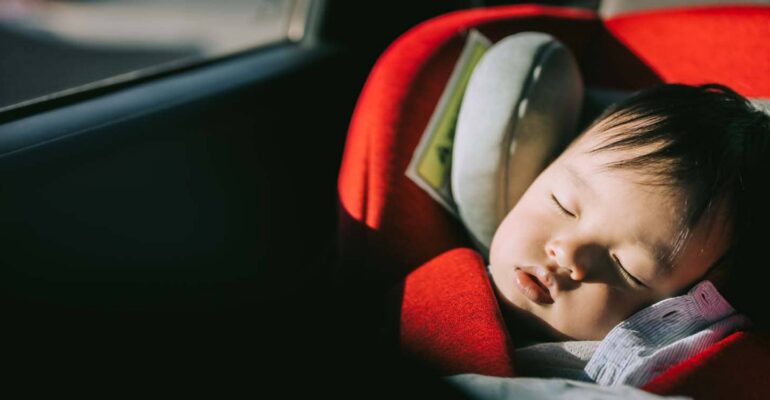
The common habit of taking toddlers for a ride to help them fall asleep turns out to have a scientific basis. A lecturer from the Faculty of Medicine and Nutrition at IPB University, dr Yeni Quinta Mondiani, SpN, explained that rocking movements and white noise from vehicles play a role in calming a baby’s nervous system.
Several studies show that the interior of a moving car creates an environment that feels safe, warm, and calm, similar to the womb.
dr Yeni explained that the sound and vibration of a car engine produce consistent noise and rocking-like motion, which help babies feel relaxed. A baby’s response to rocking movement is a natural reaction of their sensorimotor system.
“Research shows that gentle and constant rocking movements can regulate the central nervous system and the infant’s cardiac system in a coordinated manner, making them calmer,” she explained.
Rocking movements create a calming effect on the baby’s cerebrum and trigger a parasympathetic response in the form of relaxation, reduced heart rate, and a sense of comfort.
The cerebrum, or brain in young children, is part of the central nervous system. This part of the brain is considered primitive and remains in a constant state of alertness, functioning to monitor various stimuli and events in the surrounding environment.
In addition to movement, the steady hum of a vehicle engine is a form of white noise that soothes babies. White noise is sound that contains all frequencies with equal intensity and distribution.
“The roar of a vehicle engine produces a type of white noise that can mimic familiar sounds experienced by babies while still in the womb, while also masking other loud sounds that could overstimulate the baby’s brain,” she said.
White noise, dr Yeni explained, influences sleep by encouraging the baby’s brain to enter and maintain rhythmic slow wave activity, which is associated with sleep.
“While traveling, toddlers are aware that their parents are nearby and feel safe, allowing them to deactivate external stimuli and truly relax until they fall asleep,” dr Yeni elaborated.
Pay Attention to Safety
Although effective, safety aspects must remain a priority. When traveling by car, proper installation of a car seat is essential to ensure a toddler’s safety while asleep in the vehicle.
When traveling by motorcycle, ensure that the child is “securely” positioned with the parent or accompanied by another adult who can firmly hold the child.
If parents prefer that their toddler does not fall asleep during travel, Dr Yeni suggests ensuring the baby is not overly tired before the trip, avoiding travel 30–45 minutes before nap time, not giving a milk bottle or pacifier, engaging the baby in conversation, and occasionally stopping to provide a change of environment. (dr) (IAAS/KAL)

