
Not Only Causing Ecological Disasters, IPB University Entomology Experts Say Deforestation Triggers Mosquito Explosion
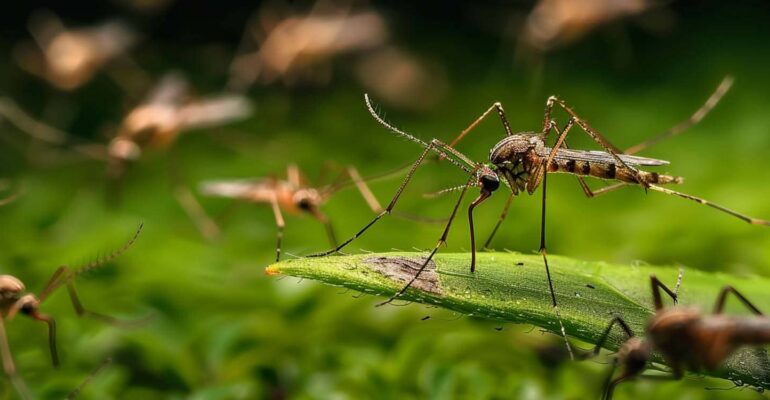
Deforestation not only triggers environmental crises, but also poses a serious threat to human health.
Entomology expert from IPB University, Prof Upik Kesumawati Hadi, revealed that the permanent loss of forest cover due to human activities has been proven to increase mosquito populations and the risk of transmitting dangerous diseases, especially in former forest areas that are now residential areas.
Deforestation is the process of permanent loss of forest cover due to human intervention. This activity irreversibly transforms forested areas into non-forested land and eliminates the ecological functions of forests.
“Forests play a major role as habitats for flora and fauna, balancing the water cycle, and regulating the climate. When forests disappear, all of these functions are lost,” said Prof Upik.
Deforestation generally occurs in forest areas that are directly adjacent to human activities, such as agriculture, plantations, mining, and settlements. According to her, the conversion of forest areas for specific purposes causes the permanent loss of forest vegetation and ecosystems.
“The most serious impact of this condition is the loss of natural habitats for flora and fauna, especially endemic species. Continued deforestation can lead to the inevitable extinction of various species of living creatures,” Prof Upik continued.
Mosquito Explosion
Prof Upik said that the loss of forests also has a direct impact on mosquito behavior. When the natural habitats of mosquitoes and wildlife are destroyed, mosquitoes lose their natural hosts and turn to biting humans.
“Humans living in former forest areas become the easiest targets as their main source of blood,” She explained.
Many research reports show that areas with high rates of deforestation have more abundant mosquito populations and greater risk of disease.
The reduction in biodiversity eliminates natural barriers to disease transmission, so humans increasingly become the main source of blood for opportunistic mosquitoes.
Mosquitoes are known to be vectors for various dangerous diseases, such as dengue fever (DBD), Zika, chikungunya, zoonotic malaria, and yellow fever.
“This condition serves as a warning that forest destruction is not only an environmental crisis, but also a real threat to human health,” Prof Upik emphasized.
In addition, she continued, deforestation disrupts the water cycle through the loss of evaporation and groundwater absorption processes, increasing the risk of flooding, landslides, and drought. Deforestation also eliminates the function of forests as carbon sinks, increases greenhouse gas emissions, and exacerbates climate change and global warming.
As a preventive measure, Prof Upik emphasized reforestation and greening efforts, forest monitoring through officials and satellite technology, as well as strict law enforcement accompanied by public education.
She also highlighted the need for active community participation in supporting forest conservation, ranging from environmental campaigns to the wise and responsible use of forest resources. (dr) (IAAS/HLF)

