
IPB University Sociologist Reveals the Social Meaning Behind the Munggahan Tradition
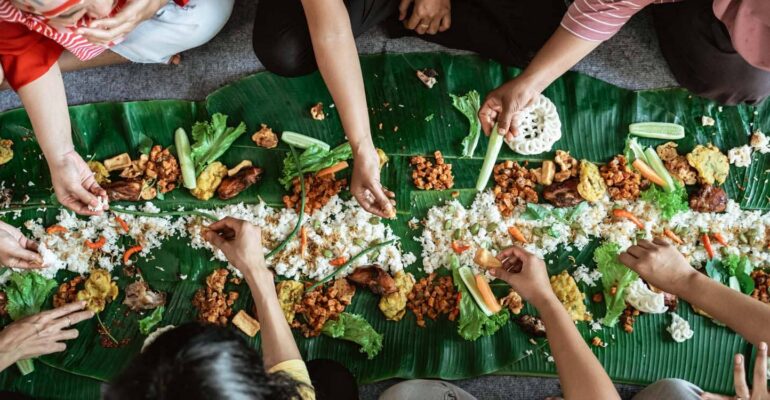
As Ramadan approaches, the munggahan tradition is often practiced by Indonesian people. This also serves as a social marker to prepare for the holy month.
According to sociologist and Chairmam of the Center for Agricultural and Rural Development Studies (PSP3) at IPB University, Dr Ivanovich Agusta, munggahan is not just a tradition passed down from generation to generation.
He believes that this tradition is a social strategy to strengthen solidarity, renew relationships, and preserve the cultural identity of the community.
“From a sociological perspective, munggahan is a social ritual that marks the transition to a more intense religious phase. This tradition functions as a social marker that helps the community organize a collective rhythm: when to improve oneself, begin religious discipline, and strengthen shared moral commitments,” explained Dr Ivanovich.
In addition, munggahan serves as a mechanism for social reconciliation through mutual forgiveness, repairing strained relationships, and restoring harmony within the community.
Strengthening Social Solidarity
Dr Ivanovich believes that munggahan can strengthen social solidarity through face to face meetings, shared meals, and activities that foster a sense of togetherness or belonging.
“This kind of interaction strengthens social capital, namely trust, support networks, and norms of reciprocity,” explained Dr Ivanovich.
In the family sphere, this tradition provides a space to renew bonds across generations of children, parents, and even distant relatives—which in modern life are often fragmented by busyness. Munggahan also extends solidarity to neighbors and the surrounding community.
Shift in Meaning
Dr Ivanovich acknowledges that the meaning of munggahan has changed with modernization.
“In some places, munggahan tends to be commodified, becoming an event for consumption, a status symbol, or merely a ceremonial routine. Social media encourages a focus on appearance, so that the meaning of togetherness has shifted to become a representation of image,” Dr Ivanovich said.
However, some communities have adapted by adding activities such as charity, donations, or mutual assistance. The challenge is to maintain the essence of simplicity, sincerity, and the restoration of social relations.
Cultural Identity and Religious Values
“Munggahan shows how people unite local cultural identity with religious values. This tradition emphasizes that religion is not only practiced individually, but also institutionalized through symbols, customs, and community gatherings,” explained Dr Ivanovich.
This tradition strengthens the attachment to cultural heritage and local history, while also emphasizing religious ethics such as friendship, mutual forgiveness, and social awareness.
Preservation of Tradition
Dr Ivanovich emphasized the importance of maintaining the authenticity of munggahan. Prioritize friendship, mutual forgiveness, and sharing. Inclusive practices, involving neighbors, vulnerable groups, and marginalized citizens, are important so that munggahan does not become an exclusive tradition.
“For the younger generation, munggahan should be understood as a means of improving the quality of human relationships, not merely a repetition of activities. Adaptations may be made to the location or format, but the principles of simplicity, caring, and togetherness must be maintained,” Dr Ivanovich said.
With this understanding, munggahan continues to thrive as a relevant, dignified tradition that strengthens solidarity, kinship, and cultural identity within the community. (AS) (IAAS/HLF)

