
IPB University Professor Reveals Conceptual Differences Between Palm Oil and Forestry Trees
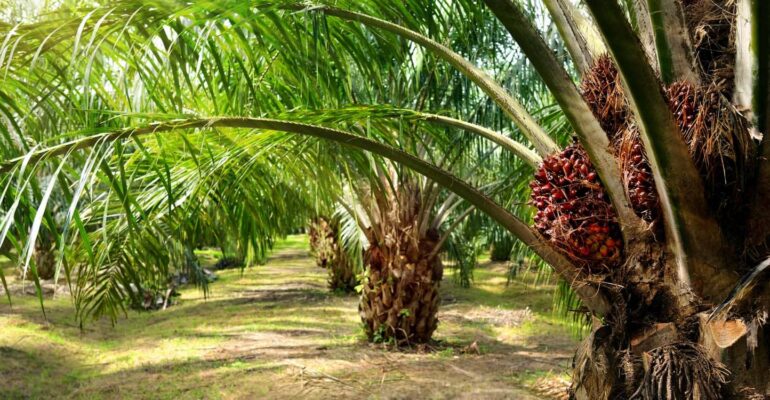
There has been much discussion about the change in the meaning of palm oil from an agricultural crop to a ‘tree’. What is the point of view from Prof Bambang Hero Saharjo, Professor at the Faculty of Forestry and Environment, IPB University?
According to Prof Bambang, this change raises serious concerns, particularly regarding forest protection and environmental management. He emphasized that, until nowadays, oil palm remains a palm tree classified as an agricultural crop, not a forestry crop.
“To date, oil palm remains a palm tree classified as an agricultural crop, and there is no regulation that has changed it to a forestry crop. So, I remain firm in my stance that oil palm does not fall under the category of trees,” he asserted.
Prof Bambang’s statement highlights the fundamental conceptual differences between oil palm plantations and forests, in terms of management objectives, biological characteristics, and ecological functions.
Conceptually, he explained, oil palm plantations are oriented towards intensive crop production with regular harvest cycles. Meanwhile, forests are managed for long-term ecosystem sustainability.
Biologically, oil palms are monocotyledonous plants without cambium, so their trunk diameter does not increase, they do not branch, they have fibrous roots, and they have a homogeneous canopy.
In contrast, forest trees generally have branches, cambium, taproots, and form a heterogeneous multi-level canopy structure.
These differences have a direct impact on ecological functions. Prof Bambang explained that the carbon absorption capacity, soil protection, flood control, and support for biodiversity in oil palm plantations are much lower than in natural forests.
Therefore, he concluded, equating oil palms with forest trees is considered a dangerous misclassification.
Distortion of Deforestation
Furthermore, this change in meaning has the potential to distort the definition of deforestation. In Indonesian regulations, legal deforestation is carried out through the mechanism of Change of Forest Area Designation and Function (PPFKH) by the central government. Meanwhile, illegal deforestation is categorized as forest destruction or illegal logging, which is punishable by criminal sanctions.
When oil palms are treated as ‘trees’, oil palm plantations are often considered equivalent to forests and even claimed to be a form of reforestation.
“As a result, there is justification for changes in forest area function, distortion of environmental assessments in Environmental Impact Assessments (EIA) and Strategic Environmental Assessments (SEA), and the risk of hidden deforestation,” he explained.
In the long term, this condition can damage hydrological functions, trigger floods and droughts, accelerate peat subsidence, and cause silent biodiversity loss.
From an environmental ethics perspective, Prof Bambang views this change in definition as a form of concept manipulation and greenwashing.
He believes that equating oil palm plantations with forests is contrary to scientific integrity, disregards the precautionary principle, and harms ecological interests and future generations for the sake of short term economic gain. (dr) (IAAS/KQA)

