IPB University Expert Reminds That the Free Nutritious Meals Program Must Be Balanced with Job Creation
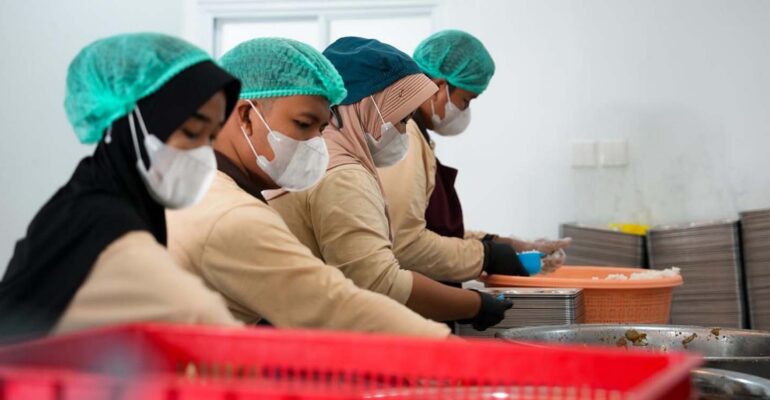
A recent statement by the Minister of National Development Planning (PPN)/Chair of the National Development Planning Agency (Bappenas), which suggested that the Free Nutritious Meals (MBG) program is more urgent than job creation, has sparked public debate.
Amid persistently high national unemployment rates, the policy prioritizing nutritional fulfillment has been viewed as a strategic step in human resource development. However, it has also raised questions regarding the balance of the country’s broader economic policy direction.
Public policy expert from IPB University, Associate Prof Muhammad Findi, stated that the MBG program, as one of the government’s priority initiatives, indeed holds significant urgency in the development of Indonesia’s human resources.
Nevertheless, he emphasized that the policy must be complemented by concrete efforts in job creation to maintain economic and social stability.
“Politically, the MBG program is a reasonable initiative as part of fulfilling the government’s agenda while also strengthening public trust,” Findi explained.
From both economic and social perspectives, he noted that the MBG program has the potential to generate long term benefits by improving students’ physical and mental health quality.
According to him, adequate nutritional intake can serve as a foundation for cultivating a more productive and competitive generation. “The MBG program represents a strategic step in preparing high quality human resources who will contribute to national development in the future,” he said.
However, Findi cautioned that improving the quality of human resources cannot rely solely on nutritional interventions. He stressed the importance of ensuring accessible education and reducing educational costs as essential supporting factors in developing competitive human capital.
“Enhancing human resource quality must go hand in hand with improving access to education, from primary to higher education levels, so that individuals can develop optimally,” he added.
He also highlighted the substantial state budget allocated to the MBG program. In 2025, the government allocated IDR 171 trillion targeting 82,9 million beneficiaries, which increased to IDR 335 trillion in 2026.
According to him, such a significant budget allocation must be accompanied by strict supervision to ensure effective implementation, particularly in maintaining food safety standards.
“Several food poisoning cases reported in certain regions indicate the need for serious evaluation of the distribution and storage systems within the MBG program,” he emphasized.
Furthermore, Findi acknowledged that the MBG program has the potential to stimulate job creation, particularly in the food production and distribution sectors. However, the sustainability and quality of the employment generated remain key challenges.
Meanwhile, Indonesia’s unemployment rate in 2025 was recorded at 4,85 percent, or approximately 7,46 million people. This condition indicates that the MBG program alone cannot serve as the sole strategy for reducing unemployment, which remains relatively high.
“The government needs to adopt more comprehensive measures by accelerating workforce absorption in other strategic sectors, such as manufacturing, agroindustry, and various service sectors, including education, healthcare, and Islamic banking,” he suggested.
In addition, accelerating the recruitment of civil servants (ASN) at both central and regional government levels could also be considered as a policy option.
According to him, the government must maintain a balance between ensuring adequate public nutrition and providing sustainable employment opportunities. “The ability of citizens to live independently through stable employment is a fundamental necessity. If unemployment rises, the risks of poverty and social instability will inevitably increase,” he explained.
Findi concluded that the MBG policy and efforts to enhance education quality must move forward in parallel as part of a comprehensive national development strategy.
“Nutritional fulfillment and the improvement of educational quality are two inseparable pillars in achieving national welfare,” he concluded. (AS) (IAAS/FHD)