Healthy Fasting Strategies to Keep Your Body in Top Shape from Prof Hardinsyah
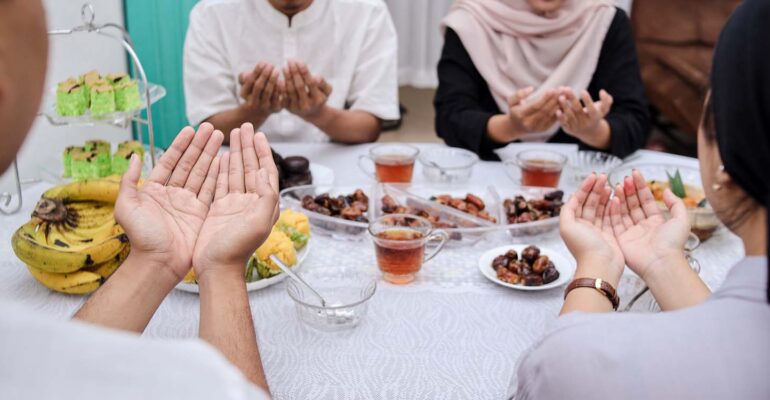
Changes in diet and activity during Ramadan require lifestyle adjustments to keep the body healthy and fit. Implementing the right habits during suhoor, iftar, and rest periods is key to ensuring that fasting is not only a form of worship, but also beneficial to health.
Professor of Nutrition Science at IPB University, Prof Hardinsyah, shares a number of important strategies to ensure that fasting is carried out optimally and the body remains in top condition throughout Ramadan.
Regulate Diet and Fluid Intake
Prof Hardinsyah explains that the type and amount of food consumed during suhoor needs to be adjusted to each individual’s body size, activity level, and fasting goals.
“For healthy teenagers and adults, the recommended intake during suhoor is generally 0,5–1 serving of staple foods, 1–2 side dishes, 1 serving of vegetables, 1 serving of fruit, and 2–3 glasses of beverages, especially water,” he explained.
The lecturer at the Department of Community Nutrition, Faculty of Medicine and Nutrition (FKGiz), IPB University, added that individuals with large and muscular bodies can consume more fiber rich staple foods and low-fat side dishes to stay energized during fasting.
“The principle of stopping before feeling full also needs to be applied by adjusting meal portions according to the body’s needs,” he added.
Additionally, foods that are too dry, oily, fatty, or have extreme flavors such as overly spicy, salty, sour, or sweet should be limited. Foods that have never been consumed before should also be avoided as they may cause digestive issues.
To prevent dehydration, Prof Hardinsyah recommends consuming around 6–8 glasses of water per day at permitted times. “The distribution can be 1-2 glasses when breaking the fast, 1-2 glasses at dinner, 1-2 glasses before bed, and 2-3 glasses at dawn and at the end of dawn,” he said.
Exercise and Sleep Still Need to be Maintained
According to Prof Hardinsyah, exercise is still safe during fasting for healthy teenagers and adults. The best time to exercise is in the morning because the air is still fresh, oxygen levels are high, and there is beneficial exposure to ultraviolet B rays.
“Exercise can also be done before breaking the fast or at night, but the benefits are not as optimal as in the morning and may interfere with prayer times,” he said.
He also emphasized the importance of maintaining sleep quality. Generally, the body requires about seven hours of sleep per day. During fasting, nighttime sleep can be managed to 4–6 hours and supplemented with a short nap of 20–40 minutes.
“Deep sleep is important. Identify factors that disrupt sleep and create conditions that support maintaining sleep quality during Ramadan,” he concluded. (Fj) (IAAS/SSR)