
Rice Self-Sufficiency Achieved, Experts Warn of Planthopper and Stunt Virus Threats: Do Not Be Complacent!
Indonesia may take pride in its achievement of rice self-sufficiency. However, plant protection experts warn that this success is not yet entirely secure.
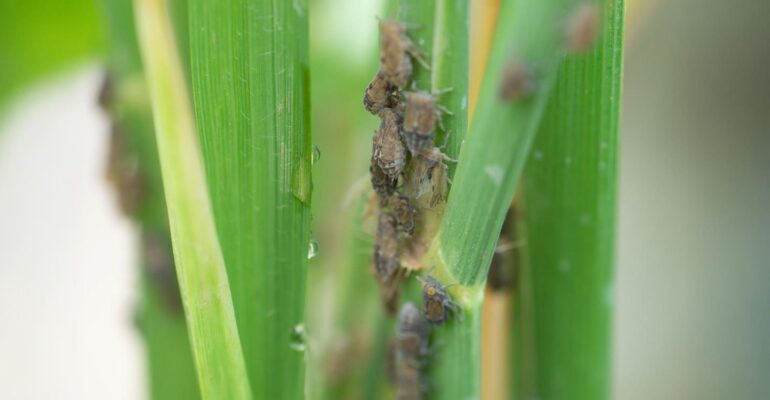
Extreme weather changes, more frequent rains, warm temperatures, and high humidity create ideal conditions for the proliferation of brown planthoppers and rice stunt virus diseases, two serious threats that can reduce production or even trigger crop failure.
This warning emerged during the Plant Doctor Series Webinar: “Alert! Anticipating Rice Stunt Virus,” organized by the Plant Protection Student Association (Himasita) of IPB University on Sunday (1/25).
In the forum, the IPB University Himasita team reported the re-emergence of brown planthoppers and symptoms of stunt disease in several regions such as Lumajang, Subang, Tulungagung, Sragen, and Padang Pariaman. This serves as a signal that vigilance must be increased.
Prof Widodo, a Professor at the Faculty of Agriculture, IPB University, invited participants to view this issue more comprehensively. According to him, planthoppers do not care about village or regency boundaries. Therefore, control is only effective if carried out collectively.
“A healthy plant is not a coincidence. It is born from well-managed soil, balanced nutrition, a supportive environment, and an ecosystem-friendly cultivation system,” stated Prof Widodo before 450 participants attending online from various backgrounds.
A similar sentiment was conveyed by Khamim Ashari, SP, a senior practitioner of Integrated Pest Management (PHT) from Lamongan. He reminded that success in maintaining production cannot be achieved by farmers working alone. What is important to undertake is collective preventive or preemptive efforts.
“If one expanse moves together, the risk can be suppressed. But if farmers act individually, planthoppers will always find a loophole,” he emphasized.
According to him, stunt virus diseases, both the grassy stunt and ragged stunt types, can spread rapidly if field management is lax, especially in the early phases of plant growth.
“We must not wait until the paddy fields are damaged. Control must be carried out from the planting planning stage. Simultaneous planting, tolerant varieties, balanced fertilization, and the utilization of natural enemies are key. Thus, preemptive actions must be the main focus in controlling these planthoppers and stunt viruses,” asserted Khamim.
Solutions do not stop at cultivation techniques in the rice fields. Policy, governance, and farmer institutions are also decisive. Khamim presented a concrete example from Besur Village, where the Integrated Pest Management Field School (SLPHT) is run with support from the village government and funding from village funds.
According to Khamim, self-sufficiency will not endure if it only focuses on fertilizers and pesticides. Aspects that must also be strengthened are human resources, institutions, and the courage to make policies starting from the village to the national level.
“In Besur, the village government dared to support SLPHT. As a result, cultivation costs dropped, and production rose by 3–5 tons per hectare. This is proof that SLPHT and local policies can make agriculture much more resilient,” he revealed.
The Plant Doctor Series Webinar itself is a discussion forum initiated by Himasita IPB University to respond to actual issues in the field, strengthen the network of agricultural actors, and encourage plant protection that is adaptive to climate change. (*/Rz) (IAAS/HNF)

