Rambutan Absent at the End of the Year, IPB University Tropical Fruit Expert Reveals the Reason
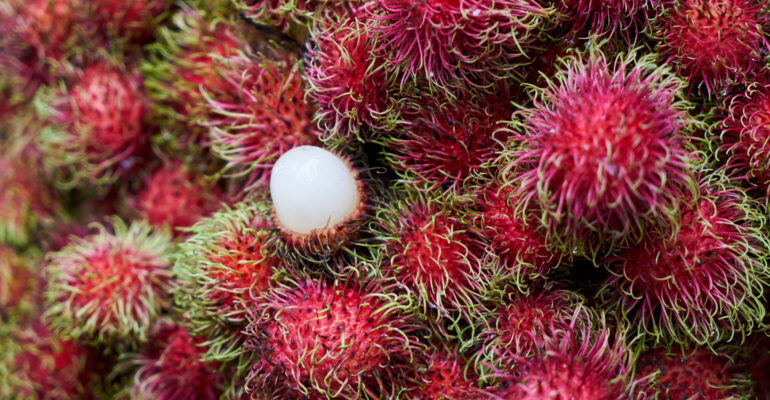
Rambutan, which is usually a “sign of the season” at the end of the year, is no longer easy to find. This condition has raised questions among the public. Prof Sobir, a tropical fruit expert from IPB University, revealed that the disappearance of the rambutan season is influenced by climate factors, plant physiology, and economic value shifts.
“There are three main possible causes for the low rambutan production at the end of 2025,” said Prof Sobir when contacted by the IPB Today editorial team (1/6).
He explained that the first factor is the climate, which is likely to experience a “wet drought” in 2025, preventing optimal flowering induction. Second, rambutan trees tend to bear fruit heavily in one year and less in the following year (biannual bearing) because the reserves from photosynthesis are depleted during the previous harvest, resulting in reduced production in the next harvest.
“Tropical fruit trees such as rambutan will flower when the plants have sufficient photosynthetic reserves and experience a dry period of 2-4 weeks. Usually, the plants flower at the beginning of the rainy season, around October-November, and are harvested in December during the rainy season,” said Prof Sobir.
He also responded to the assumption that rambutan trees are now becoming fewer or no longer bearing fruit. According to him, both of these things could happen. The relatively low economic value of rambutan makes farmers or tree owners reluctant to harvest when the number of fruits is small because it is considered uneconomical.
Regarding the possibility of a shift in the fruit season, Prof Sobir stated that this is highly dependent on shifts in seasonal patterns. If the dry season is clear and sufficiently dry, fruit production in the following season has the potential to increase.
Meanwhile, the Meteorology, Climatology, and Geophysics Agency (BMKG) predicts that 94,7 percent of Indonesia’s territory in 2026 will experience annual rainfall in the Normal category, with rainfall ranging from 1.500 to 4.000 mm/year. Meanwhile, a small portion (51 percent) of the remaining areas are predicted to experience annual rainfall in the Above Normal category. As a result, it is expected that rambutan production in 2026 will return to normal. (dh) (IAAS/EPK)